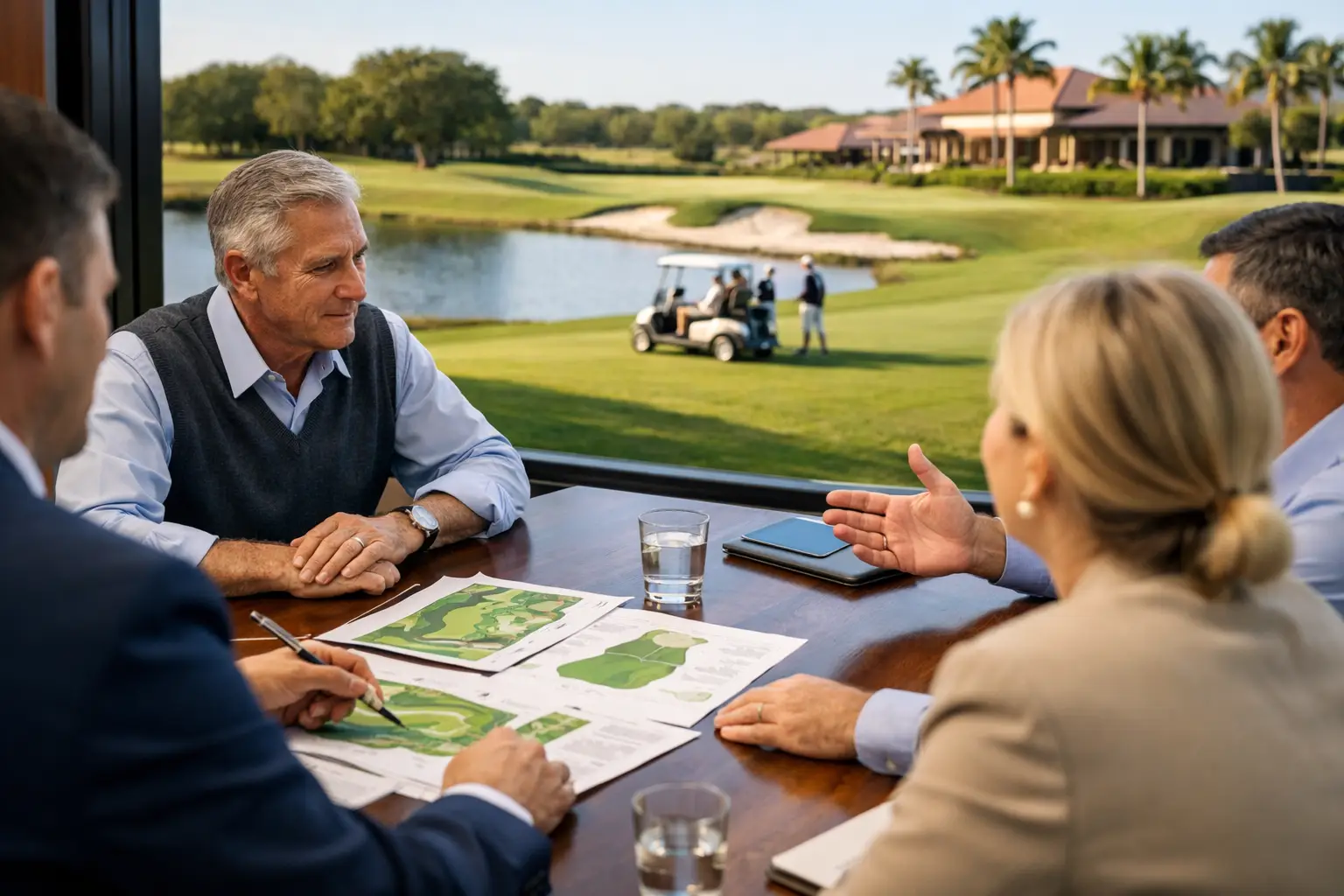
A golf club turnaround example is rarely a story about one miracle product, a new mower or a single renovation. More often, the decline began when leadership, planning and daily execution stopped operating as one system. The course may still have committed staff, but without clear priorities, reliable data and board-level accountability, standards drift while costs rise.
For boards and general managers, that is the central issue. Turf quality is not merely an agronomic outcome. It affects member satisfaction, visitor revenue, water use, labour efficiency, reputation and the club’s ability to retain members. A turnaround needs to address all of those pressures at once.
The starting point: declining conditions and rising frustration
Consider a representative regional golf club with 18 holes, a small greenkeeping team and an ageing irrigation system. The superintendent has left, recruitment has stalled, and the remaining staff are working hard but reactively. Members are complaining about inconsistent greens, thin fairway coverage and wet or dry patches that appear across the course after every change in weather.
The board sees a growing maintenance bill but cannot identify what it is buying. Water consumption is up. Chemical expenditure is inconsistent. Machinery repairs arrive as urgent requests rather than planned capital decisions. The course manager is caught between member expectations and a team that lacks the time or authority to reset the programme.
This is a common point of failure. The club does not necessarily need to immediately commit to a six-figure full-time senior appointment. It does need experienced turf leadership with the authority to establish facts, set standards and make the operating plan visible.
Golf club turnaround example: diagnose before spending
The first 30 days should not begin with a shopping list. It should begin with a disciplined diagnostic audit. That means inspecting the playing surfaces, reviewing irrigation performance, assessing soil and drainage constraints, examining current chemical and fertiliser practices, and understanding staff capability and available machinery.
Just as importantly, the consultant or senior turf leader needs to review the management controls behind the course. Are maintenance records complete? Is water use measured by area or simply accepted as a monthly bill? Are spray records compliant and useful for decision-making? Does the board receive a concise report that explains risk, expenditure and progress?
In this example, the audit identifies four linked problems: irrigation scheduling is based on habit rather than soil moisture and weather demand; fairway nutrition is uneven; staff are losing productive hours to unplanned repairs; and the club has no agreed definition of acceptable playing standards for greens, tees, fairways and bunkers.
That finding matters because it changes the conversation. The issue is no longer that the course is simply “poor”. The club can see the operational causes, the risks of doing nothing and the order in which problems should be addressed.
Set standards that the club can afford to maintain
Championship-level thinking does not mean every club should pursue tournament presentation every day of the year. That approach can be financially irresponsible, particularly where water, labour and machinery capacity are constrained.
The right standard depends on membership expectations, climate, course design, revenue model and budget. A practical turnaround sets surface-specific targets that staff can execute consistently. Greens may require tight moisture, firmness and smoothness targets. Fairways may be managed for coverage, playability and water efficiency rather than cosmetic uniformity. High-traffic areas may need a different renovation and recovery programme from lower-use sections.
The board’s role is to approve the standard and fund it appropriately. The turf team’s role is to deliver it. Senior oversight ensures the gap between those two positions is measured rather than argued about.
Stabilise the course in the first 90 days
The first operational goal is stability. Members do not need a promise that every issue will disappear immediately. They need to see that the club has control of the course and a credible plan.
In the representative example, daily irrigation is reset around actual site conditions. Priority areas are mapped so limited water goes first to greens, tees, approaches and critical fairway landing zones. Sprinkler faults and coverage gaps are recorded, ranked by playing impact and programmed into a staged repair plan rather than treated as scattered emergencies.
Nutritional inputs are also simplified. Instead of applying products because they have always been used, the programme is tied to soil testing, plant response, seasonal growth and the recovery requirements of each surface. This improves decision quality and reduces the risk of unnecessary applications.
Labour is protected by introducing a weekly work plan. Each team member understands the non-negotiable tasks, the presentation priorities and the jobs that can wait. That sounds basic, but it is often the difference between a crew that spends every day responding to complaints and one that steadily improves the course.
A short weekly report to the general manager is valuable at this stage. It should cover playing conditions, water use, completed work, emerging risks and decisions required. The report should be factual and concise. Boards need visibility, not technical theatre.
Build the systems that prevent another decline
A visible improvement in turf condition is encouraging, but it is not yet a turnaround. A club has turned the corner when the systems that created the decline have been replaced by systems that protect performance.
For this club, that means a 12-month maintenance plan linked to the playing calendar and budget. Renovation dates are locked in early. Chemical, fertiliser and seed requirements are forecast. Machinery servicing is planned around peak demand periods. Irrigation repairs are costed and prioritised over several stages, allowing the board to make informed capital decisions.
It also means developing the team. An under-resourced crew should not be criticised for lacking knowledge that the club has never invested in providing. On-site mentoring can improve irrigation practices, calibration, chemical compliance, presentation standards and task planning. The existing staff remain responsible for execution, but they work to a clearer technical framework.
This is where a fractional senior turf consultant can be commercially effective. The club gains experienced strategic oversight, regular site direction and board reporting without carrying the full cost of a permanent senior appointment. The model only works, however, when roles are clear. Advice must translate into a funded plan, and the plan must be followed between visits.
Measure the turnaround in operational terms
The strongest evidence of progress is not a glossy photo after rain. It is a set of operating measures that the board can review over time.
For a golf club, useful measures include greens performance and consistency, irrigation run times and water consumption, labour allocated to planned versus reactive work, chemical compliance, machinery downtime, member complaints and completion of scheduled maintenance activities. Not every measure needs to be perfect from day one. The point is to establish a baseline and make trends visible.
There are trade-offs. Reducing water may improve firmness and reduce disease pressure, but cuts taken too quickly can weaken surfaces during heat stress. Deferring machinery replacement may preserve cash in the short term, but repeated breakdowns can consume labour and compromise presentation. Renovation can temporarily disrupt play, yet avoiding it often creates a larger and more expensive recovery later.
Good turf leadership puts those choices in front of the board early, with costs, risks and expected outcomes stated plainly. That allows governance decisions to be made before the course is forced into crisis spending.
What the board should expect after 12 months
By the end of the first year, the representative club should have more predictable playing conditions, a documented maintenance programme, clearer water management and a team working with stronger direction. Capital priorities should be ranked rather than guessed at, and the board should understand which investments protect revenue and which are discretionary.
The most meaningful result is not that every part of the course looks identical. It is that the club can explain why its surfaces are performing as they are, what action is being taken and what it will cost to maintain the agreed standard. That is accountability.
Gen1 Sportsturf approaches turnaround work from that position: independent assessment, practical direction and measurable reporting. The aim is not to create dependence on a consultant. It is to give the club a disciplined operating system that its people can run with confidence.
A course does not recover because someone makes a persuasive presentation to the board. It recovers when the board sets the standard, funds the priorities and holds the management system to account week after week.