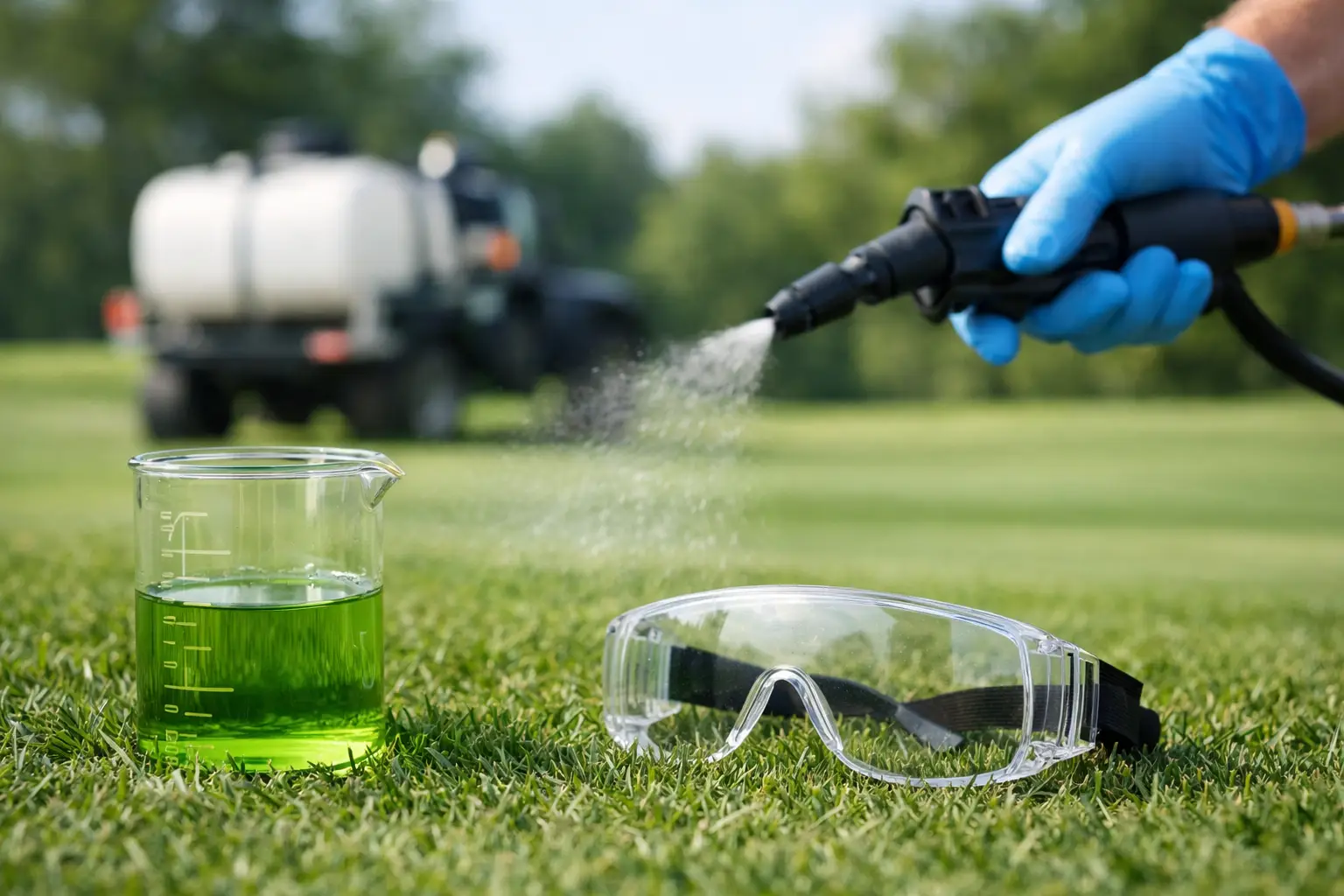
A spray application can solve a visible turf problem quickly. A poor chemical decision can create a much larger one: damaged playing surfaces, staff exposure, regulatory risk, member complaints, wasted labour and avoidable cost. For clubs, councils and sports facilities, chemical stewardship is not a paperwork exercise. It is a core management discipline that protects the asset, the people working on it and the organisation responsible for it.
The standard required is higher than simply holding the right ticket or keeping products in a locked shed. Good stewardship connects diagnosis, product selection, application timing, staff competency, record keeping and review. It gives boards and managers confidence that chemical use is necessary, controlled and defensible.
What chemical stewardship means on a sports turf facility
Chemical stewardship is the responsible management of agricultural and turf chemicals throughout their full lifecycle: procurement, transport, storage, handling, application, record keeping and disposal. In practical terms, it means every application has a clear purpose, is made by a competent person, follows the label and is supported by records that stand up to scrutiny.
That matters because turf managers work in a high-consequence environment. Golf greens, bowling greens, sports fields and public open spaces are intensively used, highly visible and often bordered by waterways, homes, footpaths or sensitive vegetation. A decision made under pressure during a disease outbreak or weed flush can affect far more than the target area.
Strong chemical stewardship does not mean avoiding chemical inputs at all costs. There are times when a registered product, applied correctly, is the most responsible option for protecting turf health, playability and long-term renovation budgets. The discipline is in knowing when chemical intervention is justified, when cultural practices should lead, and how to reduce the risk around every application.
Start with diagnosis, not the spray rig
The most expensive application is usually the one that should never have been made. Misdiagnosis can lead to repeat treatments, turf injury and continued decline while the real issue remains unresolved.
Before selecting a product, the team should establish what is actually driving the problem. Is the patch caused by disease, insect activity, compaction, poor drainage, irrigation non-uniformity, nutrient imbalance, shade or simply heat stress? Similar symptoms can have very different causes. Applying a fungicide to turf affected by dry patch or poor irrigation coverage may provide temporary reassurance, but it will not correct the underlying failure.
A disciplined diagnosis process should consider turf species, recent weather, soil moisture, mowing height, traffic, nutrition, irrigation performance and the location of symptoms. Photos, moisture readings, weather records and previous spray history are valuable evidence. They also make it easier to explain decisions to a committee or board when questions arise about cost or turf performance.
This is where independent oversight has real value. Product recommendations should follow the site diagnosis, not a sales target or a preferred supplier relationship. The right question is not, “What can we spray?” It is, “What outcome are we trying to achieve, and what is the lowest-risk effective path?”
Chemical inputs should support, not replace, agronomy
A chemical program cannot compensate for poor fundamentals. Persistent dollar spot pressure, for example, may be linked to leaf wetness, nutrition, airflow, irrigation timing or plant stress. Repeated applications without correcting those conditions increase cost and may reduce the useful life of available chemistry.
The best programs combine chemical control with practical cultural work: improving irrigation distribution, managing thatch, adjusting nutrition, relieving compaction, reducing shade where possible and setting mowing practices that match turf condition. This approach may require more planning up front, but it lowers dependence on reactive spraying and delivers a more resilient surface.
Build an accountable chemical stewardship system
A facility does not need a large full-time management structure to run a high-standard chemical program. It does need clear ownership, simple systems and regular review. The system must be workable for the people doing the job, especially where small greenkeeping teams are managing multiple priorities.
A sound program starts with a current chemical register. This should identify approved products held on site, their intended use, relevant safety information, expiry status and storage location. Remove obsolete, unregistered or no-longer-required stock rather than allowing the chemical shed to become a long-term holding area for unknown products.
Storage requires the same level of attention as application. Chemicals should be secured, clearly signed, protected from weather, separated as required and kept away from incompatible materials. Spill response equipment, current safety documentation and suitable personal protective equipment should be readily available. An unlocked, poorly organised shed is not a minor housekeeping issue. It is a preventable operational and liability risk.
Every application should be recorded at the time of work, not reconstructed weeks later. At a minimum, records should capture the site or area treated, date and time, product, rate, weather conditions, equipment used, operator and any withholding or re-entry requirements. Accurate records help demonstrate compliance, but their operational value is just as significant. They show what has been used, where resistance risk may be developing and whether the treatment achieved its objective.
For boards and senior managers, this creates a clear line of accountability. Chemical expenditure can be tracked against budget. High-use areas can be identified. Repeated treatments can be challenged early. Decisions become evidence-based rather than dependent on memory or anecdote.
Calibrated equipment is a financial control
Spray equipment calibration is often treated as a technical task for the shed. It is also a direct cost control measure. If a boom, handgun or granular spreader is delivering above the intended rate, the facility is paying too much, increasing phytotoxicity risk and potentially applying outside label directions. If it is under-applying, the result may be poor control, repeat labour and unnecessary pressure on the turf.
Calibration should be scheduled, documented and repeated after equipment repairs or changes to nozzles, pressure, travel speed or application method. Nozzles wear. Pressure gauges fail. Operators change. These are normal realities of turf operations, which is precisely why the process cannot rely on assumptions.
Water quality, tank agitation and mixing order also matter. A product can be technically appropriate but perform poorly if the spray mix is unstable, coverage is inconsistent or water volume does not suit the target. The goal is not simply to get product out across the turf. It is to place the correct dose where it is needed, consistently and safely.
Manage resistance before it manages the facility
The loss of chemical efficacy is a strategic risk, particularly for high-value surfaces such as greens and fine turf. Repeated use of the same mode of action can select for resistant disease, weed or insect populations. Once control failures become established, the cost and complexity of management rise sharply.
A resistance plan should rotate modes of action where suitable products and labels allow, avoid unnecessary repeat applications and use cultural controls to reduce pressure. It should also distinguish between a genuine product failure and an application, timing or diagnosis failure. Not every poor result is resistance.
This is an area where short-term thinking is expensive. Applying the same familiar product because it worked last season may feel efficient, but it can narrow future options. A planned seasonal program protects the effectiveness of available chemistry and gives staff a clear decision framework during busy periods.
Staff competency is part of the control measure
The person mixing and applying chemicals carries a significant responsibility. Training should cover more than operating a sprayer. Staff need to understand label directions, personal protective equipment, weather constraints, spill response, re-entry controls, application records and the reasons behind the program.
Clear supervision matters when casual staff, apprentices or team members with limited chemical experience are involved. A capable team is less likely to make errors, and more likely to raise concerns before an error reaches the turf. This is not about creating bureaucracy. It is about ensuring standards hold when the superintendent is on leave, a key staff member departs or the facility is under seasonal pressure.
For under-resourced sites, documented procedures and regular mentoring are especially valuable. They reduce dependence on one person’s knowledge and help build a more capable, confident operational team over time.
Review results and report the risk
Chemical stewardship needs a regular review cycle. At least seasonally, management should assess chemical spend, target issues, product performance, repeat applications, equipment condition, staff training and any incidents or near misses. The review should ask whether the program is reducing pressure or merely responding to it.
Reporting should be proportionate to the facility, but it should be board-ready. A concise report that shows expenditure, major treatments, compliance status, emerging risks and recommended actions is more useful than a folder of spray diaries no decision-maker can interpret. It turns chemical management into a visible governance function rather than a hidden operational cost.
There will always be pressure to act quickly when turf quality is threatened. The strongest facilities respond with discipline: diagnose the issue, select the lowest-risk effective treatment, apply it properly, record it accurately and learn from the result. That is how chemical stewardship protects both the playing surface and the people trusted to manage it.