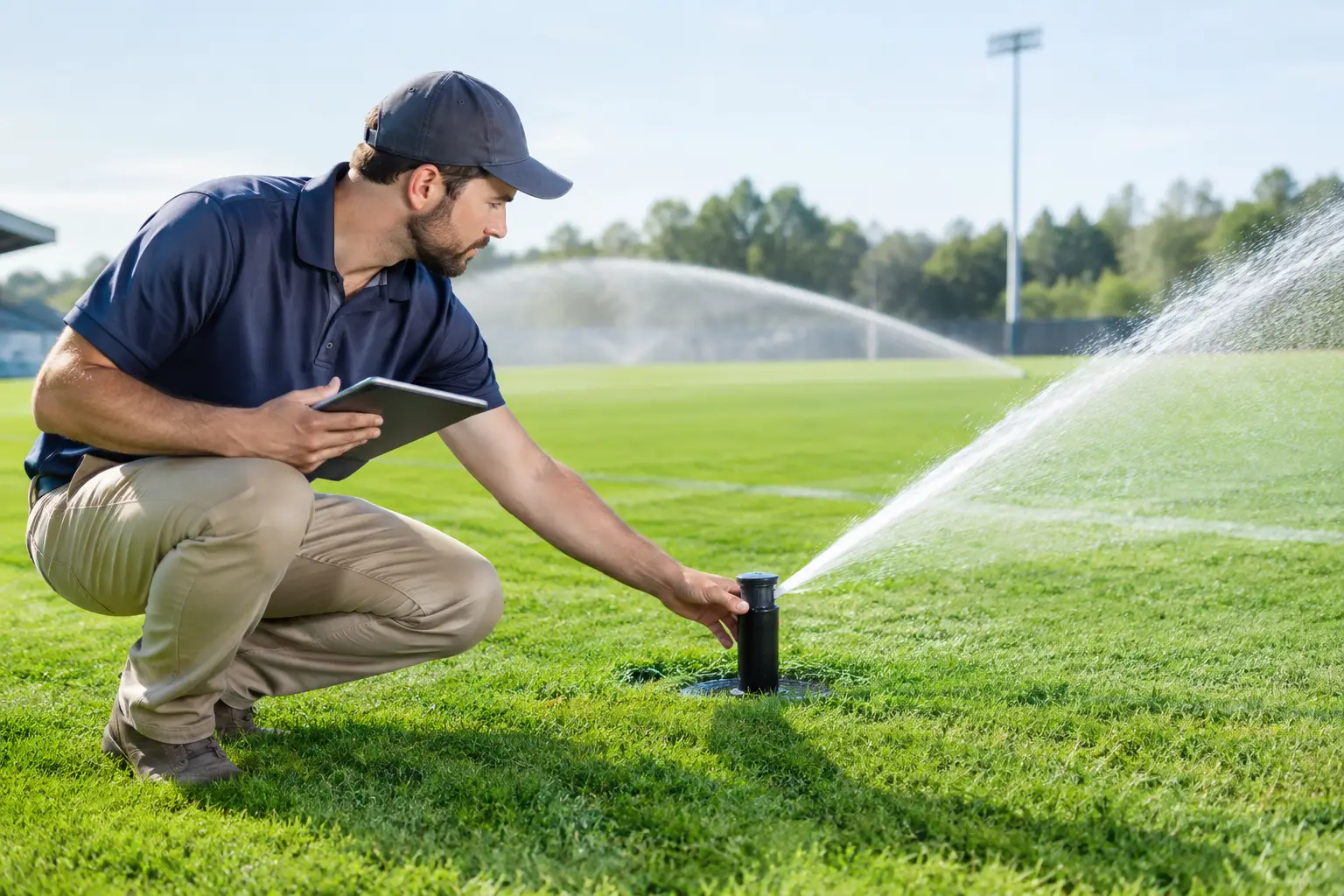
A single wet fairway, dry bowling rink edge or inconsistent sports field can quickly become a board-level issue when water costs are rising and member expectations are not. An irrigation audit service review should establish whether a provider can identify the real causes of poor performance, quantify the operational risk and give your team a practical path to correct it.
For golf clubs, councils, bowling clubs and sports facilities, irrigation is not simply a maintenance line item. It affects turf quality, playability, labour efficiency, chemical performance, water compliance and the useful life of a major capital asset. A credible audit must therefore go beyond a controller report or a visual walk-around. It needs to connect field evidence with system capability, operating practices and financial consequences.
What an irrigation audit service review should assess
The first test is scope. A worthwhile irrigation audit examines how the system is performing at the turf surface, how it is being operated, and whether its infrastructure can deliver what the facility needs. If any one of those areas is ignored, the recommendations may look neat on paper but fail in practice.
At turf level, the auditor should measure application uniformity across representative areas. This identifies whether water is being delivered evenly, where dry spots are being created and where excess water is being wasted. On a golf course, greens, tees, high-traffic landing areas and surrounds often need separate attention. At a council sports ground, centre corridors, goal mouths and boundary zones may carry the highest risk.
System operation is equally important. A controller can run every night and still produce weak results if runtimes, cycle-and-soak settings, station priorities and seasonal adjustments are poorly matched to soil, weather and turf demand. A useful audit reviews actual schedules rather than assuming programmed settings reflect what occurs in the field.
Infrastructure condition must also be tested. Pressure variation, blocked nozzles, leaking valves, damaged heads, poor head spacing, aged solenoids and undersized pumps all affect coverage and operating cost. An audit should distinguish between issues that can be corrected through maintenance and those that require staged capital works. Those are very different decisions for a committee or council budget.
The difference between an inspection and an audit
An inspection can identify obvious defects. An audit provides the evidence needed to prioritise them.
For example, a technician may report that several sprinkler heads are not rotating correctly. That is useful information, but it does not tell the facility whether those heads are driving a genuine turf problem, how much water is being lost, what the repair should cost or whether pressure across the entire zone is outside acceptable range.
A proper irrigation audit uses measured data to build that context. It should include field testing, pressure checks, precipitation or catch-can testing where appropriate, controller and runtime analysis, a review of water source constraints, and an assessment of maintenance history. The final report should translate findings into a ranked action plan with clear responsibility, likely cost range and expected outcome.
This matters because irrigation faults rarely occur in isolation. A dry patch may be caused by inadequate coverage, but it may also be a compaction issue, a blocked lateral, a valve fault, incorrect scheduling, poor infiltration or an unsuitable irrigation window. Replacing heads without diagnosing the system can spend money without solving the problem.
What good audit reporting looks like
Boards and managers need more than technical observations. They need a document that supports sound decisions.
The strongest reports separate immediate operational fixes from medium-term maintenance work and longer-term renewal planning. Immediate work might include nozzle replacement, head levelling, valve repairs or schedule changes. Medium-term priorities may involve pressure regulation, decoder repairs, pump servicing or targeted pipework replacement. Long-term work could include controller upgrades, mainline renewal or a redesign of areas with chronic poor coverage.
Recommendations should also be ranked by consequence. A fault affecting greens, playing surfaces, public safety or water compliance deserves a different priority from a minor issue in a low-use landscape area. That ranking allows management to allocate funds where they protect turf performance and reduce risk first.
A credible report will state assumptions and limitations. No audit can guarantee savings without considering rainfall, water pricing, soil profile, turf species, event schedules and the condition of the asset. Facilities using recycled water, for instance, may face different filtration, salinity and leaching requirements than those using potable or bore water. The point is not to promise a fixed percentage reduction before testing. It is to identify where water is being applied without producing value.
Questions to ask before appointing an auditor
An irrigation audit service review should assess the provider as carefully as the system. Technical knowledge is essential, but independence and implementation capability are just as important.
Ask whether the auditor sells irrigation equipment or receives incentives tied to product recommendations. Product expertise has value, but a facility should understand where commercial interests sit. Independent advice gives boards greater confidence that repairs and capital works are based on performance need rather than sales targets.
Ask how field performance will be measured and what deliverables will be supplied. A report that says “improve coverage” is not enough. Your team needs locations, priorities, evidence, recommended corrective action and a clear explanation of the likely effect on turf, water use or labour.
It is also reasonable to ask who will help convert findings into action. Many greenkeeping and grounds teams are already stretched. A report left on a desk will not improve irrigation. The best audit process includes a practical implementation sequence, accountability for assigned tasks and follow-up checks to confirm the changes are working.
Finally, consider whether the auditor understands your facility type. Golf, bowls, community sport and elite stadium surfaces have different presentation standards, irrigation windows, staffing structures and financial pressures. A technically correct recommendation can still be operationally unrealistic if it ignores the people expected to carry it out.
Turning audit findings into better turf outcomes
The value of an audit is realised in the months after the report is issued. Start with the actions that protect playing quality and prevent avoidable loss. If poor distribution is stressing high-value turf, correct that before investing time in fine-tuning schedules. If leaks or uncontrolled valves are wasting water, repair those before judging whether a new controller will create savings.
Once critical defects are addressed, build irrigation checks into normal maintenance routines. Heads should be inspected after mowing, aeration, events and machinery work. Nozzles, arcs and levels change over time. A system that tested well twelve months ago may now be delivering unevenly because of gradual damage and adjustment drift.
Scheduling should be reviewed through the season, not set once and forgotten. Rainfall, evapotranspiration, wind, turf recovery, renovation programmes and water restrictions all change demand. The goal is not to irrigate less at all costs. The goal is to apply the right amount, in the right place, at the right time, while maintaining the surface standard your members, users and stakeholders expect.
For facilities without a full-time superintendent, this is where external leadership can make a material difference. Gen1 Sportsturf combines irrigation analysis with maintenance planning, staff support and board-level reporting, so recommendations are managed as part of the broader turf program rather than as a standalone technical exercise.
The commercial case for independent irrigation oversight
Irrigation expenditure is often underestimated because the true cost is spread across water, electricity, repairs, labour, turf recovery and member dissatisfaction. A wet area may require extra mowing and disease management. A dry area may demand hand-watering, more fertiliser, repeated repairs and difficult explanations when playing quality falls away.
An audit brings those hidden costs into view. It allows management to decide whether a repair is a minor maintenance expense, a recurring operational drag or evidence of a larger capital problem. That is a far stronger basis for budget decisions than reacting only when turf fails.
The right irrigation audit does not merely identify faults. It creates an accountable operating standard for water use, system maintenance and turf performance. When the evidence is clear and the action plan is realistic, the grounds team can work with confidence and the board can fund improvements with a clear understanding of the return.