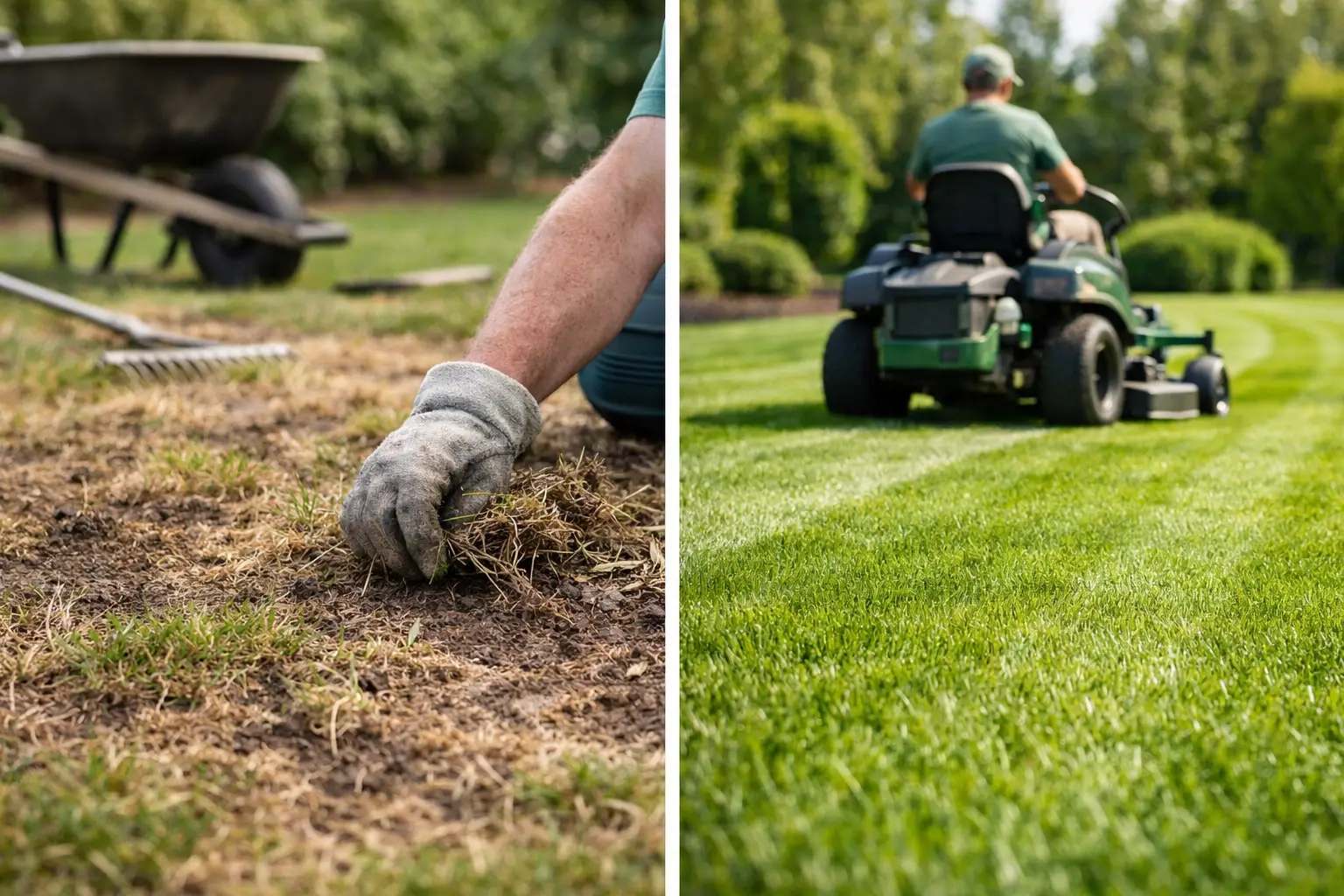
A failed irrigation station on the eve of a members’ event, a disease outbreak across a bowling green, or a worn goalmouth after a wet winter can force immediate action. Reactive versus preventive turf maintenance is therefore not an academic debate for Australian facilities. It determines whether a club or council is controlling its turf program, or repeatedly paying to recover from avoidable failures.
Reactive work will always have a place. Weather events, equipment breakdowns and unexpected pest pressure do not wait for the next committee meeting. The operational risk begins when emergency work becomes the dominant maintenance model. Costs rise, staff spend their time firefighting, playing surfaces lose consistency, and management is left explaining avoidable disruption to members, users and the board.
What reactive turf maintenance really costs
Reactive maintenance is work undertaken after turf quality, playability or an asset has already deteriorated. It may involve treating visible disease, replacing failed irrigation components, repairing compacted areas, resodding worn turf or responding to complaints about inconsistent surfaces.
The invoice for the immediate repair is only part of the cost. A disease outbreak may require additional chemical applications, labour, temporary closures and lost presentation standards. An irrigation failure can mean hand-watering, plant stress and a much higher risk of turf loss during heat. A poorly timed renovation can affect member experience for weeks, even if the work is technically completed on budget.
For boards and general managers, the more serious issue is volatility. Reactive programs create irregular expenditure and make annual budgeting difficult. They also encourage short-term decisions, such as applying an inexpensive treatment without first identifying the underlying drainage, nutrition, irrigation or cultural issue.
This approach can appear economical because it defers planned spending. In practice, deferral often shifts a manageable operating cost into a more expensive repair, with a poorer playing outcome attached. Replacing turf after decline is rarely cheaper than protecting a healthy plant through sound water management, nutrition, aeration and monitoring.
Preventive turf maintenance puts control back in the program
Preventive maintenance uses planned inspections, measurement, seasonal scheduling and clear standards to reduce the likelihood and consequence of failure. It is not simply a calendar of routine tasks. It is a management system that connects turf condition, asset reliability, labour capability and budget priorities.
A strong preventive program begins with a factual baseline. What is the condition of the irrigation system? Are water applications aligned with soil profile needs, or driven by habit? Which areas repeatedly lose density? Is the fertiliser program responding to soil and tissue data? Are mowing, aeration and renovation practices suitable for the surface, usage levels and local climate?
Those questions matter across golf courses, bowling clubs and public sports grounds, but the answer is site-specific. A high-traffic council oval may need a different recovery strategy from a golf club green with shade and airflow constraints. A bowling green with persistent disease pressure may require changes to moisture management and daily observation, not simply a stronger chemical response.
Preventive work gives the ground team a plan they can execute with purpose. It defines what needs to be done, when it needs to happen, what outcome is expected and how results will be checked. That is where turf maintenance moves beyond activity and becomes accountable performance management.
The critical distinction: planned does not mean rigid
A preventive program must adapt to conditions. Scheduling an aeration event is sensible; proceeding when the soil is saturated or the surface is under acute stress may not be. Likewise, a nutrition plan should guide decision-making, but it cannot ignore extreme rainfall, heat, wear or a changing turf response.
The value lies in having reliable data, clear thresholds and experienced oversight when the plan needs adjustment. Without that structure, teams can mistake routine for prevention and continue tasks that no longer address the facility’s actual risk.
Reactive versus preventive turf maintenance: the operational comparison
The difference is most visible in how a facility manages its four core resources: people, water, budget and time.
In a reactive operation, staff time is consumed by urgent calls, hand-watering, emergency repairs and repeat treatments. Preventive maintenance allocates labour to high-value work before conditions deteriorate. This does not eliminate urgent jobs, but it reduces the number that could have been identified earlier.
Water is another major dividing line. Reactive irrigation often follows visible stress, when turf has already lost colour or vigour. Preventive irrigation management considers soil moisture, root depth, uniformity, weather forecasts, system performance and the water-holding capacity of different profiles. It protects turf health while exposing wasted water, leaks and poorly performing stations before they become major failures.
Budget control follows the same pattern. A reactive budget is usually a collection of surprises. A preventive budget identifies likely renewals, seasonal works, equipment priorities and risk areas in advance. It enables management to decide what can be staged, what cannot be deferred and where capital expenditure will remove ongoing operating cost.
Time is the final resource, and often the one underestimated by committees. Turf decline does not always announce itself loudly. Reduced infiltration, shallow rooting, uneven irrigation coverage and gradual organic matter build-up can develop over months. By the time symptoms are obvious, the recovery window may be narrow and expensive.
Where reactive action is still the right decision
Preventive maintenance should not be confused with slow decision-making. There are situations where immediate intervention is the correct and responsible response. A burst main, major storm damage, an irrigation control failure, vandalism or a fast-moving pest or disease event requires decisive action.
The test is whether the emergency was genuinely unforeseeable, or whether the warning signs were ignored. Repeated pump failures, recurring dry spots, annual disease outbreaks in the same location and frequent surface closures are not isolated incidents. They are management signals that demand investigation and a revised plan.
A mature operation responds quickly to genuine emergencies, then conducts a disciplined review. What happened? What did it cost in labour, materials, water and lost access? Could monitoring, maintenance, staff training or capital renewal have reduced the exposure? This turns an incident into operational intelligence rather than another line item in next month’s accounts.
Building a preventive program that staff can deliver
The most effective programs are practical. A small ground team cannot maintain championship standards through paperwork alone, and an ambitious annual plan has little value if it does not match available labour, machinery and budget.
Start with a diagnostic review of turf surfaces, irrigation assets, maintenance practices, chemical records, staffing capability and historical problem areas. This identifies the few priorities that will produce the greatest improvement, rather than spreading limited resources across every possible task.
From there, establish seasonal maintenance plans with defined standards for presentation, playing quality, moisture management, nutrition, cultural works and reporting. Record the condition of priority surfaces consistently. Photographs, moisture readings, irrigation audits, clipping yields, disease observations and work records can all contribute, provided the team uses them to make decisions rather than simply complete forms.
Chemical compliance deserves particular attention. Preventive management means maintaining accurate records, reviewing product choices against the issue being treated, observing label requirements and integrating chemical use with cultural controls. It reduces both compliance risk and the tendency to rely on repeat applications as the default answer.
Staff mentoring is equally important. Ground staff need to understand why a task is being prioritised and what they should observe after it is completed. Clear direction improves consistency, builds capability and gives supervisors confidence to escalate a developing issue early.
The board’s role is to demand visibility, not micromanage turf
Boards and committees do not need to prescribe mowing heights or select wetting agents. Their responsibility is to ensure the facility has a credible plan, appropriate expertise and visibility of material risks.
A useful board report should show surface performance against agreed standards, major works completed, irrigation and water-use issues, budget variance, emerging risks and decisions required. It should distinguish between operational spending and capital needs, particularly where ageing infrastructure is driving recurrent cost.
This reporting discipline changes the conversation. Instead of debating a complaint after a surface has failed, the board can assess whether investment in drainage, irrigation renewal, staff capability or planned renovation will protect the asset and member experience over the long term.
For facilities without a full-time superintendent, independent fractional oversight can provide the missing leadership layer. Gen1 Sportsturf works with existing teams to establish standards, diagnose risks and maintain accountability without imposing a supplier-driven agenda.
The strongest turf programs are not the ones that never face a problem. They are the ones that see risks early, act with evidence and reserve emergency spending for events that could not reasonably have been prevented.