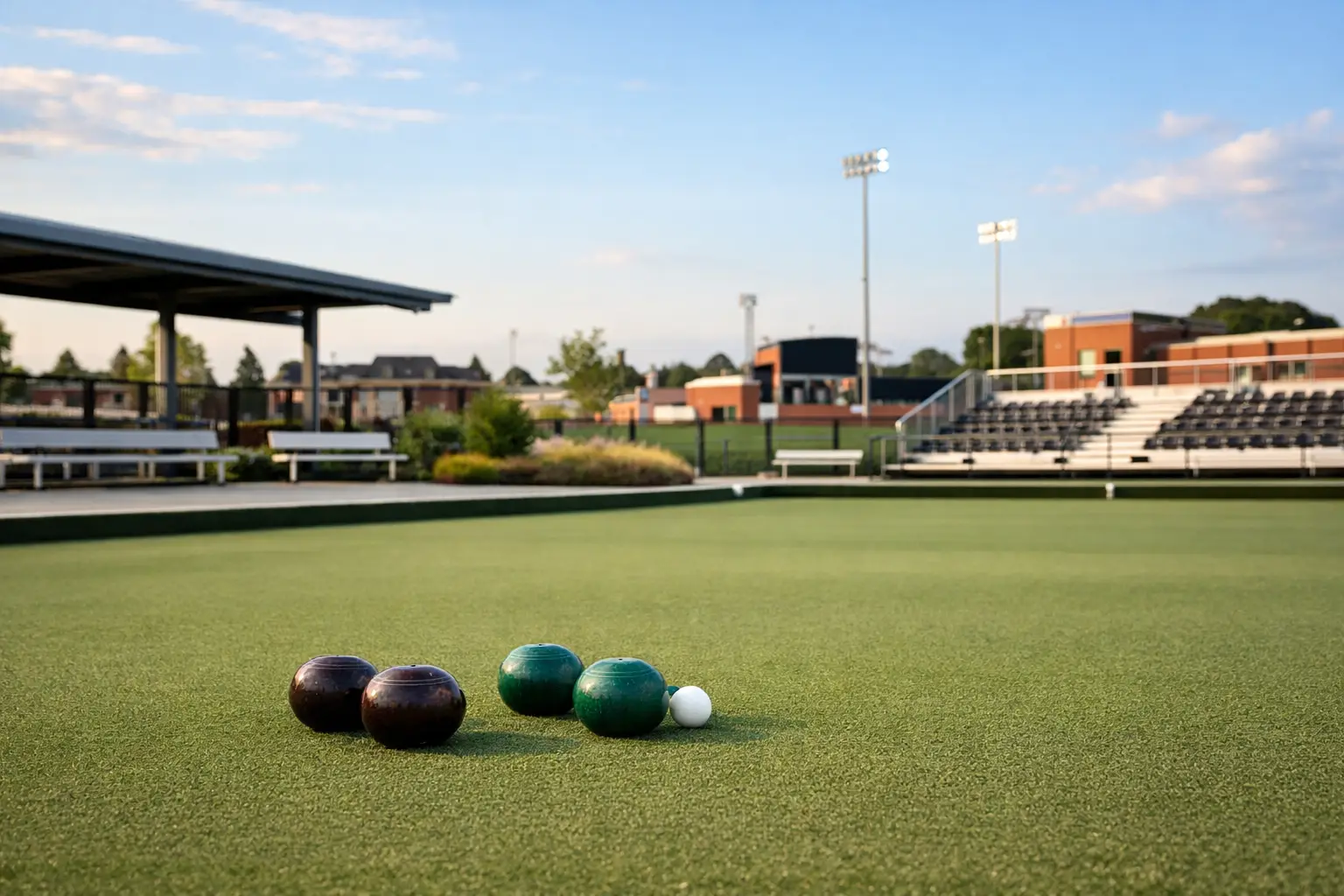
A bowling green can look tired for months before it becomes unplayable. Pace becomes inconsistent, bare areas widen, weeds gain ground and members begin adjusting their game around surface defects. This bowling green renovation case study examines the operational decisions behind recovering a declining green without treating renovation as a one-off cosmetic exercise.
The scenario reflects a common position for bowling clubs across Queensland, New South Wales and Victoria: a well-used green, a small grounds team, limited capital and a committee under pressure to protect member experience. The issue was not a lack of effort. It was a lack of clear diagnosis, prioritised investment and a maintenance programme that matched the green’s soil, turf species, irrigation capacity and traffic load.
The starting position: declining surface quality
The green had progressively lost density through the playing season. Surface levels were becoming less reliable, organic matter had accumulated in the upper profile and water was not moving consistently through the rootzone. In some areas, irrigation sat near the surface. In others, the turf showed drought stress despite a seemingly adequate watering schedule.
This is where many clubs make an expensive mistake. They respond to visible symptoms with more fertiliser, more water or an aggressive chemical programme. That can temporarily improve colour, but it does not correct the underlying cause. It can also increase disease pressure, waste water and leave the green more dependent on reactive inputs.
The committee initially viewed the problem as a turf replacement issue. The diagnostic process showed it was broader than that. The existing turf still had recovery potential, but only if the club addressed rootzone compaction, thatch accumulation, irrigation uniformity and day-to-day maintenance discipline together.
Bowling green renovation case study: diagnosis before works
The first stage was to establish facts that the committee and grounds team could use to make decisions. A renovation recommendation should never start with machinery selection or a product list. It should start with a site assessment.
The assessment reviewed surface firmness, thatch depth, root development, soil moisture patterns, irrigation coverage, drainage performance, shade, traffic concentration and the greenkeeping programme. Historical fertiliser, chemical and watering records were also examined. These records matter because they reveal whether the green has been managed strategically or by short-term response.
Three issues shaped the renovation plan. First, excessive organic matter was holding moisture at the surface and reducing firmness. Second, irrigation distribution was uneven, creating a cycle of overwatering some zones to keep dry zones alive. Third, routine cultural practices were not sufficiently relieving compaction or promoting upright, dense turf.
None of these findings required a full reconstruction. That distinction protected the club from unnecessary capital expenditure. A rebuild may be justified where drainage, levels or rootzone contamination have failed beyond practical correction. In this case, a targeted renovation offered a stronger return, provided the club committed to the follow-up programme.
Setting the scope around recovery, not appearance
The renovation scope was built around the green’s capacity to recover before the next key playing period. Timing is critical. A technically sound programme carried out in poor growing conditions can create more risk than value. The club selected a window that allowed the turf to respond while giving sufficient time for surface preparation before competition use increased.
The works included controlled scarification to remove accumulated organic material, hollow-tine coring to relieve compaction and improve gas exchange, topdressing to restore surface smoothness and dilute remaining thatch, and overseeding or turf recovery work where density was weakest. The depth and intensity of each operation were matched to the profile condition rather than applied as a standard annual routine.
Irrigation adjustments ran alongside the physical works. Head performance and coverage were checked, scheduling was reset around actual moisture demand, and staff were given clear trigger points for hand watering. Water management is often the difference between a renovation that establishes evenly and one that produces patchy recovery.
The programme also reduced unnecessary input risk. Nitrogen was used to support recovery, not force soft growth. Chemical decisions were based on observed pest, weed and disease pressure, with application records maintained for compliance and future analysis. This protected plant health and gave the committee a more defensible view of operating cost.
The critical period: the six weeks after renovation
Renovation day is not the result. It is the beginning of the highest-risk management period.
For the next six weeks, the grounds team worked to a written recovery schedule covering mowing, rolling, nutrition, irrigation, disease monitoring, surface moisture and traffic control. Daily observations were recorded rather than left to memory. This created accountability and allowed small issues to be corrected before they became setbacks.
Mowing height was managed conservatively at first, then stepped down as density and rooting improved. Rolling was used selectively to support smoothness without compacting a recovering profile. Topdressing continued in light applications, helping to refine the surface while avoiding burial of young turf.
Member communication was also handled directly. Temporary reductions in green availability can be unpopular, particularly at a busy club. However, members are more likely to support a closure or restricted use period when the committee explains the condition, the programme and the expected benefit. The alternative is allowing play to continue through a vulnerable period, then spending more to repair damage that could have been avoided.
The trade-off was clear: short-term access was restricted to protect long-term playing quality. That is a governance decision as much as a turf decision.
Measurable outcomes the committee could report
The expected performance measures were set before works began. This is essential. Without agreed measures, a renovation can be judged only by whether the green appears greener from the clubhouse.
The reporting framework tracked turf density, bare-area recovery, root depth, surface moisture consistency, irrigation adjustments, disease incidents, labour hours and member feedback. The committee also monitored whether follow-up maintenance was being completed on schedule. A good plan has little value if it sits in a folder after the contractor leaves.
Within the recovery period, the green showed stronger coverage across the previously weak zones, improved firmness and more consistent response to irrigation. The improvement was not attributed to a single treatment. It came from correcting several linked weaknesses and giving the grounds team a practical operating standard.
Commercially, the result was equally important. The club avoided the immediate cost and disruption of a full rebuild while reducing the risk of repeating the same decline next season. Water use could be managed with greater precision, reactive product applications were less likely, and staff time was directed towards planned tasks rather than constant patch repairs.
That is the value of an independent renovation programme. It does not begin with selling a product or prescribing the biggest possible project. It identifies what the facility needs, what it can realistically execute and how success will be measured.
What other clubs should take from this case
A bowling green renovation should be treated as a business decision with agronomic consequences. The board needs clarity on cost, closure timing, operational risk and expected return. The grounds team needs a realistic programme, defined standards and access to experienced support when conditions change.
Clubs should be cautious of generic renovation specifications. The right approach depends on turf species, climate, soil profile, water quality, irrigation infrastructure, green usage and staff capability. A coastal green in Queensland will not have the same constraints as an inland Victorian green, and a programme that succeeds on one can fail on another.
The most effective model is staged: diagnose the profile, define the outcome, complete only the works the condition justifies, then manage recovery with discipline. It requires more oversight than simply booking machinery for a day, but it prevents capital from being spent on visible symptoms while the actual cause remains in the ground.
For committees facing declining green performance, the immediate question should not be, “What product do we need?” It should be, “What is causing the decline, what is the lowest-risk correction, and who is accountable for the result?” That conversation creates better greens and better decisions.