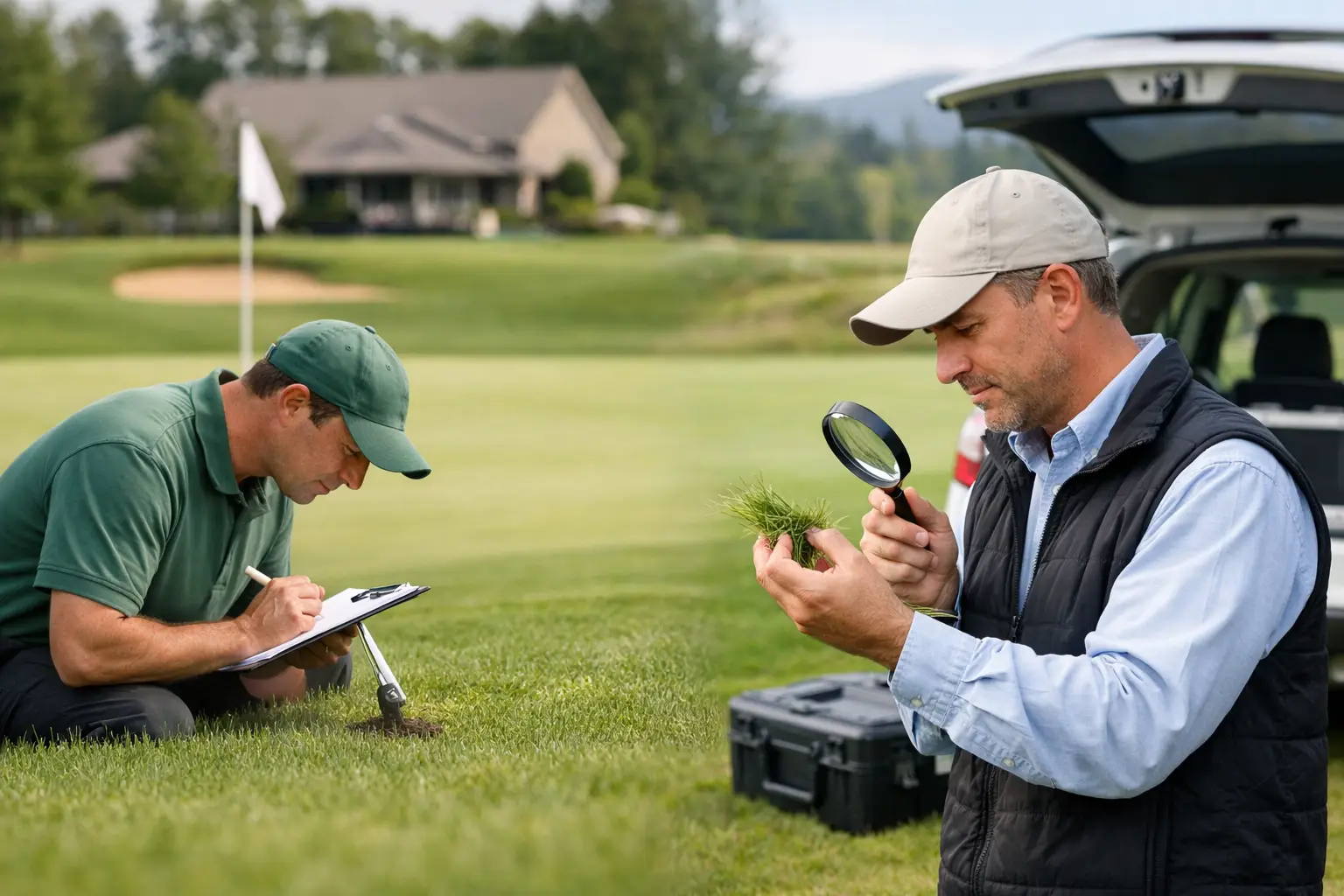
A water bill arrives well above budget. Greens are inconsistent, staff are stretched, and the committee wants answers before the next member meeting. This is when the question of in-house versus independent agronomy becomes more than a technical discussion. It becomes a governance, cost-control and performance decision.
For golf clubs, bowling clubs, councils and sports facilities, turf quality is visible every day. So are the consequences of poor decisions: stressed playing surfaces, avoidable chemical exposure, reactive spending, irrigation waste and declining confidence from members or users. The right advisory model should improve the surface while giving management a clear line of accountability.
The real choice is not simply internal or external
An in-house model places technical direction with the Superintendent, course manager, head greenkeeper or internal grounds leadership team. In a well-resourced facility with an experienced leader, capable staff and reliable reporting systems, this can work extremely well. Decisions are made quickly, site knowledge is deep, and the person leading the programme sees the consequences of every decision firsthand.
The weakness is not that in-house leadership lacks value. The weakness arises when one person is expected to be the agronomist, irrigation strategist, people manager, chemical compliance lead, budget owner, machinery planner and board communicator - often while filling operational gaps. That is a large remit, particularly during periods of staff turnover, weather pressure or capital works.
Independent agronomy introduces an external adviser whose role is to assess the site objectively, set direction, challenge assumptions and review results against agreed standards. It should not replace a capable ground team. It should give that team a clearer plan, stronger technical support and senior oversight without adding a full-time executive salary.
The practical question is therefore not, “Which model is best?” It is, “What level of leadership, independence and specialist capability does this facility need right now?”
In-house versus independent agronomy: the key differences
The most significant difference is the source of advice and the line of accountability.
An internal leader is close to the operation. They know which irrigation head has been unreliable, where drainage slows after heavy rain and which staff member is ready for more responsibility. That knowledge is operationally valuable. But internal teams can also be constrained by workload, budget pressure, established habits or the understandable reluctance to escalate a problem that has developed under their watch.
An independent adviser brings distance. They can inspect turf performance, irrigation practices, fertiliser inputs, disease pressure, labour allocation and maintenance standards without being tied to a supplier, a legacy programme or internal politics. For a board or general manager, that independence matters. It provides advice that can be tested against data, budget and facility objectives rather than accepted on reputation alone.
There is also a material distinction between independent agronomy and supplier-led advice. Product representatives can offer useful technical input, particularly when diagnosing a specific issue or explaining a product application. However, their commercial role is linked to product sales. A truly independent consultant should be able to recommend reduced inputs, alternative products, changed practices or no purchase at all where that is the right outcome.
That separation helps protect both the turf programme and the budget.
Cost is more than salary
A full-time Superintendent or senior turf leader can be the right investment for a high-complexity venue. A major championship course, a large council portfolio or a facility with extensive daily preparation demands may need dedicated, on-site leadership. The value of that role extends well beyond agronomy.
For many clubs and public facilities, however, the challenge is not whether senior expertise is valuable. It is whether the organisation can sustain the full employment cost. Salary, superannuation, leave, recruitment, vehicle, training and the risk of vacancy all sit behind the headline figure. In a constrained labour market, securing the right candidate can take months, and retaining them is not guaranteed.
A fractional independent model changes the equation. The facility retains its existing ground staff while purchasing defined senior oversight through a monthly retainer. This can include site inspections, seasonal planning, irrigation analysis, input reviews, staff mentoring, chemical compliance oversight and reporting for management or the board.
The value should not be measured only against a salary. It should also be measured against avoidable costs: unnecessary chemical applications, poorly timed fertiliser, excess water use, emergency renovations, repeated contractor call-outs and capital expenditure made without a clear maintenance strategy. One poor decision on irrigation, drainage or turf selection can cost more than a year of disciplined advisory support.
When in-house leadership is the stronger model
Internal leadership is often the stronger choice when the facility has a proven Superintendent or course manager with the authority, time and technical capability to lead the whole programme. They need a functioning team beneath them, accurate budget visibility and a board that understands the difference between strategic turf management and day-to-day maintenance.
This model is particularly effective where the leader has established systems for soil testing, clipping yields, moisture monitoring, irrigation audits, chemical records, machinery replacement and regular reporting. In that environment, external input may be occasional and targeted rather than ongoing.
Even then, an independent review can be useful. High-performing facilities do not avoid scrutiny because they are performing well. They use specialist review to confirm assumptions, benchmark standards and identify risks before they become expensive.
When independent agronomy delivers greater value
Independent support is most valuable where leadership capacity is missing, stretched or in transition. A Superintendent departure, a new course manager, declining playing conditions or rising operating costs are all clear signals that the current model needs reinforcement.
It is also a strong fit where the board wants better visibility but does not want to interfere with the greenkeeping team. The consultant can create a clear bridge between governance and operations: translating turf requirements into priorities, budgets, risks and measurable actions. That protects staff from ad hoc committee direction while ensuring decision-makers receive straight answers.
For councils and multi-site sports facilities, an independent adviser can establish consistent maintenance standards across venues while recognising that each surface, budget and user group is different. The purpose is not to impose a generic programme. It is to establish disciplined decision-making that suits the site.
Gen1 Sportsturf applies this model through practical, ongoing oversight: the facility’s team executes the work, while senior turf leadership sets the standards, reviews results and keeps the programme accountable.
Do not outsource accountability
Independent agronomy should strengthen accountability, not blur it. The adviser must be clear about what they assess, what they recommend, how often they attend and how results are reported. The facility must be equally clear about who approves expenditure, who manages staff, who completes the work and who owns daily site decisions.
The best arrangements are built around a documented seasonal plan. It should identify surface priorities, renovation windows, irrigation targets, nutrition strategy, disease risk, labour requirements, budget pressure points and capital works dependencies. Recommendations should then be reviewed against actual conditions, not left in a report that no one revisits.
A useful reporting structure covers three areas. First, it records turf performance and risks. Second, it tracks actions completed and actions delayed. Third, it identifies the financial implications of decisions before they become emergencies. This gives the board evidence to support investment and gives the ground team a defensible operating plan.
Questions decision-makers should ask before choosing
Before appointing an adviser or recruiting internally, a club or facility should test the model against its actual needs. Is the current team receiving enough senior technical direction? Are irrigation, fertiliser and chemical decisions documented and measured? Can management explain the maintenance strategy and its cost to the board? Is advice independent of product sales? And if the senior staff member left tomorrow, would the programme continue with confidence?
The answers often reveal that the issue is not a lack of effort. It is a lack of structure, specialist oversight or clear decision rights.
There is no prize for choosing a full-time role when a fractional model would deliver the required leadership more efficiently. Equally, a consultant is not a substitute for daily supervision where the scale of the operation demands an experienced on-site leader. The right model is the one that matches the facility’s complexity, risk profile, staff capability and financial capacity.
Turf performance rarely improves through a single recommendation. It improves when good advice is independent, the plan is practical, the team is supported and someone is accountable for checking that the work delivers the intended result.