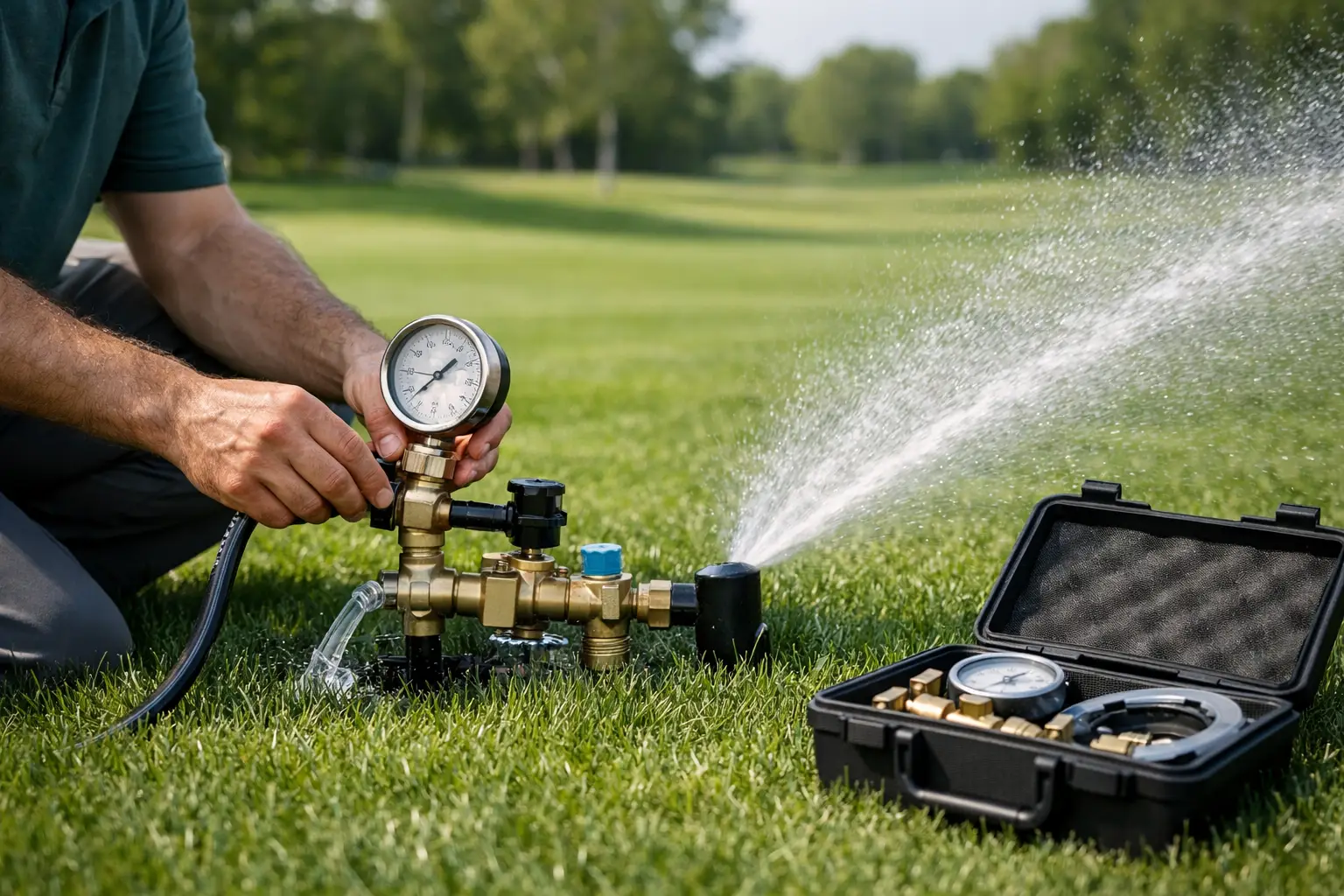
A green can look adequately watered while receiving uneven application from one side to the other. That is the operational risk irrigation pressure testing is designed to expose. It replaces assumptions based on visual turf response with evidence: what pressure is actually available, where it is lost, and whether every zone can deliver the precipitation rate the irrigation design intended.
For golf clubs, bowling clubs, councils and sports venues, this is not a minor technical exercise. Pressure faults affect playing surfaces, labour, water consumption, pump wear and the confidence management has in its maintenance budget. A system that runs without alarms is not necessarily a system performing correctly.
Why irrigation pressure testing belongs in the maintenance plan
Pressure is the force that enables a sprinkler to achieve its designed throw, rotation and droplet pattern. Flow is the volume of water moving through the system. The two are connected, but they are not interchangeable. A zone may have enough flow to operate while still lacking the pressure required for consistent coverage at the heads furthest from the valve.
When pressure is too low, sprinkler radius contracts and distribution becomes uneven. The usual response is to increase run times. That may keep stressed turf alive, but it also over-waters areas near the sprinkler, increases disease risk and pushes water costs higher. It is a poor substitute for finding the underlying constraint.
Excessive pressure creates a different problem. Fine droplets are more vulnerable to wind, spray patterns can break down and fittings, valves and sprinklers are placed under unnecessary strain. On exposed sports fields and golf sites, that lost water can be substantial. More pressure is not better. Correct pressure at the operating head is the objective.
For boards and general managers, the commercial case is straightforward. Pressure testing identifies whether a water-use issue is caused by scheduling, infrastructure, pump performance or local restrictions in the network. That distinction matters before approving capital works, changing staffing routines or accepting another rise in the water account.
What a proper irrigation pressure test measures
A credible assessment does more than connect a gauge at the pump station. Pressure must be measured while relevant zones are operating, at points that reveal how the system behaves under demand. Static pressure, recorded when no water is moving, can look healthy while dynamic pressure falls away once several heads are running.
Testing should compare pressure at the source, at valve outlets and at representative sprinkler heads, particularly those at the end of laterals or on high points across the site. The result is then assessed against the manufacturer’s operating specifications and the practical needs of the area being irrigated.
The most useful investigation also considers flow, run-time configuration and elevation. A green sitting above the pump station does not have the same pressure conditions as a flat bowling green near the mainline. Nor does a large sports oval with multiple heads operating together. System design, pipe diameter, valve capacity and concurrent station operation all influence the result.
A pressure reading without context is only a number. The value comes from connecting that number to sprinkler performance, turf symptoms and the site’s operating programme.
Static versus dynamic pressure
Static pressure is useful for identifying supply potential and broad network integrity. It cannot confirm that a zone will perform under normal irrigation demand. Dynamic pressure is measured while water is flowing and is the figure that most directly affects sprinkler operation.
The gap between the two readings can reveal restrictions, undersized pipework, a partially closed isolation valve, obstructed filters or a pump that is unable to maintain duty. A substantial drop does not automatically mean the entire system needs replacement. It means the cause must be isolated before money is committed.
Pressure uniformity across a zone
One good reading at the first sprinkler is not proof of zone performance. The test must look across the zone. If the first head is within specification but the final heads are materially lower, the turf is being managed with a built-in coverage defect.
This is especially common where additions have been made to an older network, where laterals have accumulated sediment, or where station flow has been increased beyond the original design. On golf courses, the issue may be most obvious on green surrounds and high-profile approaches, where dry edges drive hand watering and create inconsistent firmness.
Common faults pressure testing can reveal
Pressure losses are often blamed on ageing infrastructure as a whole. In practice, the cause may be local, repairable and far less costly than a major renewal programme. Testing brings discipline to that diagnosis.
Common findings include:
- worn or incorrectly sized nozzles that alter flow demand and sprinkler performance;
- blocked strainers, filters or valves restricting water movement;
- leaking pipework, valve diaphragms or fittings reducing available pressure;
- pump controls or variable speed settings that do not match current demand;
- pressure-regulating devices that have failed, been bypassed or are incorrectly set; and
- zones that have been expanded or reconfigured without recalculating hydraulic capacity.
Each fault carries a different response. Replacing a nozzle or servicing a valve is an operational correction. Repairing a mainline leak is a maintenance priority. A pump upgrade, new mainline or redesigned station layout is a capital decision. Treating every issue as a capital problem wastes funds; treating a systemic hydraulic constraint as routine maintenance delays the inevitable.
A disciplined testing process
Testing is most valuable when it is completed as part of a structured irrigation review rather than a one-off reaction to dry turf. Begin with the irrigation plan, controller programming, pump specifications and any recent changes to heads, valves or pipework. Site knowledge matters because the same pressure reading can have different implications depending on design intent.
Select representative zones across the facility: high-use playing areas, distant zones, elevated areas, recently renovated sections and zones with known turf inconsistency. Record static and dynamic readings at agreed points while noting the number and type of heads operating, nozzle configuration, station flow and weather conditions.
The next step is physical verification. Observe head rotation, throw, nozzle condition, leaks, valve operation and evidence of pressure variation such as weak streams or incomplete coverage. Where readings point to a restriction, isolate sections of the network methodically rather than relying on guesswork.
A useful test record should capture the date, zone identification, pump pressure, valve pressure, representative head pressures, station flow and the corrective action assigned. That record turns testing into an accountability tool. It allows the course manager or grounds team to verify that a repair improved performance, and gives the board a clear basis for expenditure decisions.
When should facilities test pressure?
An annual review is sensible for most facilities, ideally before the higher-demand irrigation period. In Queensland, that may mean preparation ahead of prolonged heat and storm-season volatility. In New South Wales and Victoria, testing before the main summer demand allows faults to be addressed before staff are forced into constant hand watering.
There are also clear triggers for additional testing. These include a sudden increase in water use, repeated dry spots in the same location, poor sprinkler throw, unexplained pump cycling, major renovations, valve or nozzle changes, and complaints about inconsistent surface condition. Pressure testing should also be part of due diligence before committing to an irrigation upgrade. It establishes whether the current system has isolated weaknesses or a fundamental capacity problem.
Frequency depends on system age, asset condition and the consequence of failure. A championship course with high expectations and a heavily used municipal sports precinct should not rely on the same testing interval as a low-demand site with a simple, recently installed system.
Turning readings into better decisions
The mistake is to collect pressure data and file it away. The findings should influence irrigation scheduling, maintenance priorities and capital planning. A zone operating below specification may need repair before run times are changed. A pump that only loses pressure during peak concurrent demand may require controller sequencing changes before replacement is considered.
Pressure testing also provides a baseline for measuring improvement. If water use falls after repairs, but turf quality holds or improves, management can demonstrate a genuine operational gain. If hand-watering hours reduce, the team can redirect labour towards presentation, detail work and preventative maintenance.
For under-resourced teams, independent review can be particularly valuable. It separates supplier recommendations from an evidence-based assessment of what the facility actually needs. Gen1 Sportsturf uses irrigation analysis in this way: to give operational teams practical priorities and give decision-makers clear, defensible recommendations.
The strongest irrigation programmes are not built around longer run times or reactive repairs. They are built around knowing what the system can deliver, correcting the constraints that matter, and reviewing performance before turf quality becomes the warning sign.