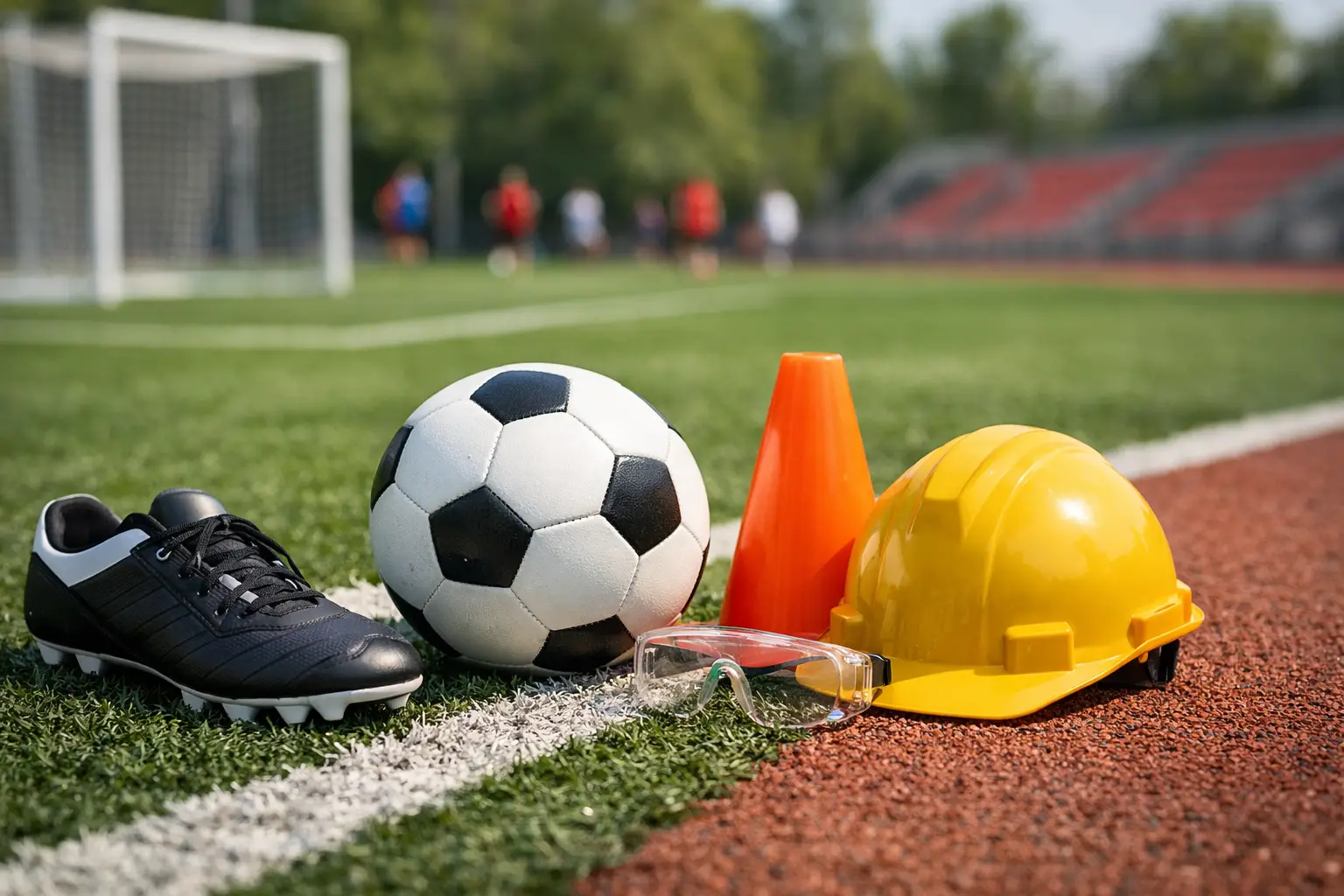
A player stepping into a concealed depression, slipping on an overwatered goalmouth or colliding with an exposed irrigation head is not simply an unfortunate incident. It is a foreseeable surface-management failure. This sports field surface safety guide is for clubs, councils and venue operators that need to protect participants while controlling maintenance cost, operational disruption and organisational risk.
Safe surfaces do not happen because the turf looks green from the clubhouse or grandstand. They are produced through inspection, clear standards, timely intervention and accountable decisions. The condition of the ground on match day is the visible result of choices made weeks and months earlier around irrigation, nutrition, mowing, renovation, staffing and budget.
Sports field surface safety guide: start with exposure
Surface safety is not a single measure. A field can be firm enough to support play yet become unsafe because traction is poor. It can drain freely in most areas but retain water at a worn entrance, creating a slip hazard. It can look level during a casual walk-through while holding holes and localised settlement that become dangerous at running speed.
The first discipline is to assess risk in the context of actual use. A lightly used community oval has different exposure from a venue hosting multiple training sessions, junior fixtures and senior competition each week. Likewise, a bowls green, golf practice area and synthetic court each have their own critical hazards, participant movements and governing-body expectations.
Management should define what safe play means for each surface, then identify the conditions that make it unacceptable. That includes the sport’s competition rules, the facility’s maintenance specification, historical incidents and the practical judgement of experienced ground staff. A generic checklist is useful, but it does not replace a site-specific standard.
Understand how playing surfaces fail
Most surface incidents arise from a small number of predictable failures. Unevenness is often the most obvious. Holes, divots, animal damage, settlement around drainage lines, unstable goalmouths and poorly repaired trenching can all create trip or ankle-injury risk.
Hardness presents a different challenge. Prolonged dry weather, compaction, thin turf cover and inadequate irrigation uniformity can produce firm, unforgiving ground. Conversely, excessive moisture weakens the surface, reduces footing and causes rapid damage under play. The correct response depends on soil profile, sport, season and traffic. Watering heavily to soften a hard field may create a worse problem if drainage and rootzone stability cannot support it.
Traction requires the same judgement. Sparse turf, thatch, surface algae, loose sand or a wet compacted layer can affect how footwear interacts with the ground. On natural turf, root strength and plant density matter as much as the surface appearance. On synthetic surfaces, fibre condition, infill distribution, seams and contamination need a separate inspection and maintenance regime.
Drainage failures deserve particular attention because they compound every other issue. Standing water is visible, but subsurface wetness can be more damaging. It leads to soft spots, turf loss, rutting and inconsistent footing, often in the high-wear zones where players accelerate, decelerate and change direction.
Inspect before play, not after a complaint
A pre-use inspection should be a formal operational control, not an informal glance from a vehicle. The person conducting it needs authority to escalate concerns and, where required, delay, modify or close play. If nobody is clearly empowered to make that call, the facility carries unnecessary risk.
The inspection should focus on areas of highest use: goalmouths, centre corridors, run-off zones, player entry points, sidelines, wicket surrounds, drainage inlets and sections affected by recent works. Staff should walk these areas rather than rely on visual inspection alone. Foot pressure and a simple probe often reveal instability, softening or voids that cannot be seen from a distance.
Record the condition, weather, action taken and decision made. Photographs are valuable where defects are identified or use is restricted. The purpose is not paperwork for its own sake. A reliable record demonstrates that the facility has a system, helps identify recurring failures and gives boards factual evidence when investment is needed.
Where four or more conditions require attention, use a prioritised defect register rather than scattered emails or verbal instructions. It should identify:
- the exact location and nature of the defect
- the risk level and temporary control required
- the responsible person and due date
- the repair method and materials required
- the date the repair was checked and closed.
This creates an audit trail and prevents small defects becoming accepted as normal.
Measure the conditions that drive risk
Surface safety decisions improve when they are supported by data. Moisture readings, irrigation run times, rainfall, soil temperature, compaction observations and turf-cover assessments help explain why a field is changing. They also stop management from responding to a complaint with guesswork or a costly one-off treatment that does not address the cause.
For higher-use venues, periodic testing of surface hardness, evenness and traction may be appropriate. Testing methods and acceptable ranges should align with the sport, surface type and relevant governing-body requirements. Numbers without context can mislead, so results need to be interpreted alongside weather, soil moisture, usage and recent maintenance.
Irrigation audits are especially valuable where one section of a field is repeatedly too dry or too wet. Distribution uniformity, pressure, nozzle performance, controller programming and drainage interaction all influence safety. Replacing turf in a failing goalmouth will not hold if the underlying water-management problem remains unresolved.
Maintain for stability, not appearance alone
The maintenance plan should be built around the periods when the surface is most vulnerable. For winter codes, that may mean protecting turf cover and managing wet-weather traffic. For summer grounds, it may mean maintaining root depth, managing heat stress and avoiding excessive hardness. The calendar should anticipate demand rather than chase damage once the season is underway.
Aeration, topdressing, overseeding, fertiliser applications and renovations must be timed to support recovery. Each practice has a trade-off. Aggressive cultivation can relieve compaction and improve infiltration, but it can temporarily reduce stability or disrupt fixtures. Heavy topdressing can improve levels and drainage over time, but poor application can affect ball roll, footing and surface usability.
Traffic management is often the lowest-cost control. Rotating training areas, moving portable goals, protecting high-wear zones and restricting access after significant rain can preserve surface integrity. These measures only work when coaches, hirers and operations staff understand the reason for them and management supports the decision when pressure builds to keep a field open.
Treat weather closures as a management decision
Rain, heat and prolonged dry conditions all require defined trigger points. A wet-weather policy should not rely on whoever happens to answer the phone. It should state who inspects, who makes the closure decision, how users are notified and what conditions must be met before reopening.
The same principle applies after severe storms, flooding or extended heat. Inspect irrigation components, goal structures, trees adjacent to playing areas, drainage points and surface stability before allowing use. Do not confuse the absence of standing water with a safe return to play. Saturated profiles and weakened turf can fail under traffic even when the surface appears to have recovered.
Put accountability where it belongs
Boards and senior managers do not need to direct every mowing or watering decision. They do need confidence that safety risk is being identified, controlled and reported through a disciplined system. Monthly reporting should show surface condition trends, significant defects, closures, water use, maintenance completed, budget pressures and capital items that cannot be solved through routine works.
This is where a clear distinction between operational execution and strategic oversight matters. Ground staff need practical direction, priorities and support to carry out the work. Governance groups need independent reporting that explains risk, cost and consequence in plain terms. When the two are connected, decisions about drainage, irrigation renewal, staffing or renovation are made before a poor surface becomes an incident, a member complaint or a reputation problem.
For facilities without a full-time senior turf leader, an independent consultant can establish the inspection framework, maintenance standards and reporting cadence while developing the capability of the existing team. Gen1 Sportsturf applies this model to give clubs and public facilities senior oversight without adding a full executive salary to the cost base.
Make the next inspection count
The most useful starting point is not a major capital project. Walk the highest-use areas before the next fixture, document what is found and decide who has authority to act. A well-kept record of small, timely decisions is often what protects players, preserves budgets and gives a board confidence that the surface is being managed to a standard rather than left to chance.