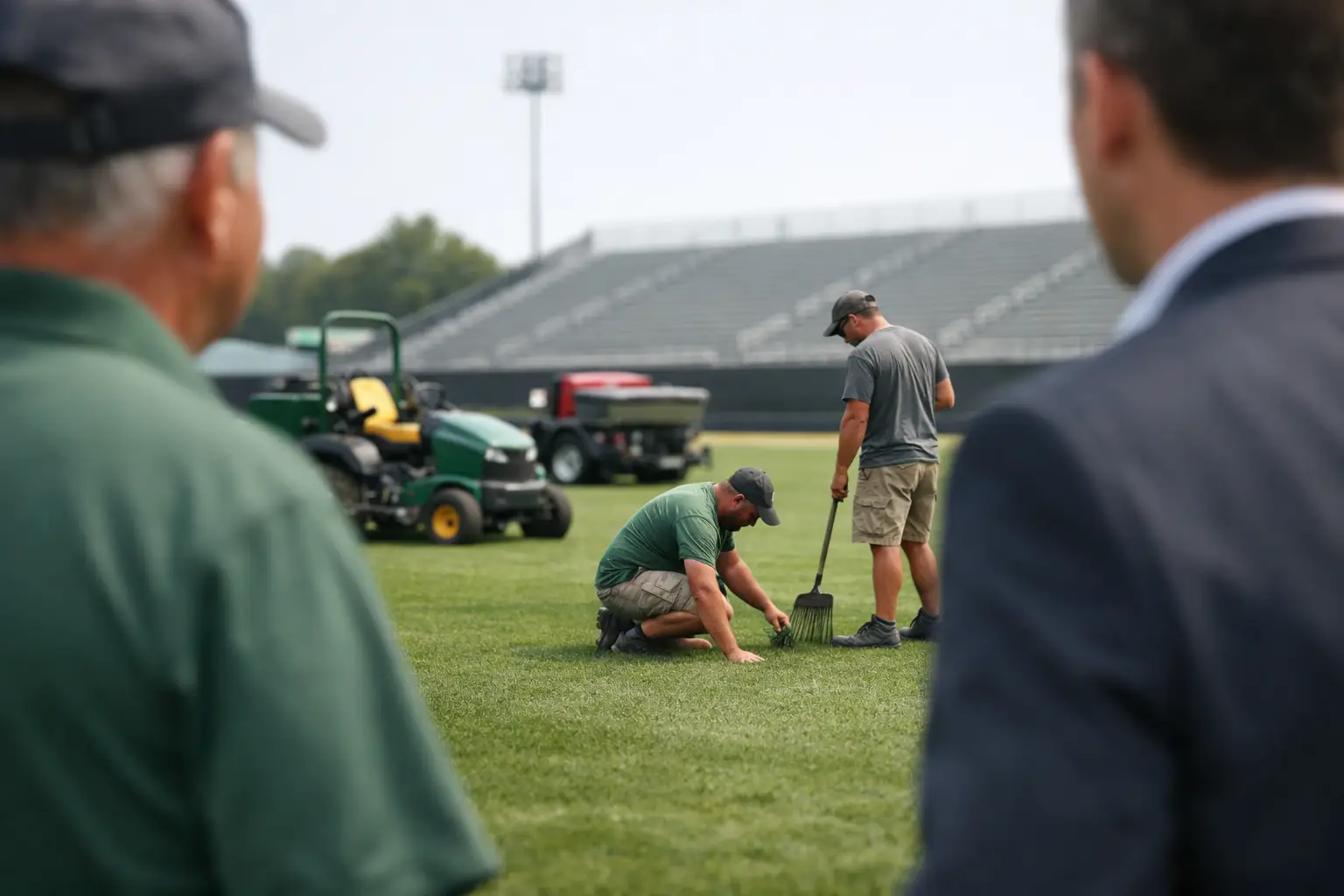
A Superintendent resigns, a senior greenkeeper retires, or one experienced operator takes extended leave. Within weeks, the consequences are visible: irrigation faults stay unresolved, chemical records fall behind, the maintenance programme becomes reactive and standards begin to drift. For many facilities, the sports turf labour shortage is not an abstract recruitment issue. It is an operational and financial risk sitting in plain view.
Golf clubs, bowling clubs, councils and sports venues are being asked to deliver more with smaller, less experienced teams. Members and users still expect quality surfaces. Boards still need expenditure controlled. Water, labour and chemical compliance do not become less demanding because the right people are hard to find.
The answer is not to pretend a labour gap can be solved by working the remaining team harder. It requires clear technical leadership, disciplined planning and a realistic model for building capability on site.
Why the sports turf labour shortage is hitting facilities hard
Sports turf is a skilled trade with a long learning curve. A capable turf professional needs practical knowledge of soils, grasses, disease pressure, nutrition, machinery, irrigation, renovation timing, chemical use and workplace safety. They also need judgement: knowing which issue requires immediate intervention, which can be monitored, and where money will produce a measurable improvement.
That judgement is difficult to replace quickly. A job advertisement may attract applicants, but it does not guarantee the successful candidate has the experience to lead a complex golf course, manage public sports fields through a difficult summer, or explain a technically sound plan to a board.
The problem is compounded when senior people leave. Their knowledge often sits in their head rather than in a documented maintenance plan, irrigation strategy, asset register or annual budget. The team left behind may be hardworking and committed, yet still lack the authority or experience to make higher-risk decisions.
This creates a familiar cycle. Small issues are deferred. Reactive repairs displace planned maintenance. Inputs are purchased to solve symptoms rather than causes. Staff lose confidence because priorities change daily. Turf quality drops, costs climb and management receives less reliable information.
Recruitment matters, but it is not the whole strategy
Every facility should continue to recruit good people, retain its best staff and create clear career pathways. Competitive pay, workable rosters, appropriate equipment and professional development all matter. So does recognising that a first-class greenkeeping team needs leadership, not simply a list of tasks.
However, recruitment alone is a slow and uncertain answer. In regional locations, the candidate pool may be limited. In metropolitan areas, qualified staff can have multiple offers. A club or council may also be unable to justify a full-time Superintendent salary, vehicle, superannuation, leave coverage and associated overheads, particularly when its existing team can competently carry out the day-to-day work.
The practical question for boards and general managers is therefore not only, “Can we hire a Superintendent?” It is, “How do we secure the level of leadership required to protect the asset while we build a stable team?”
That distinction matters. Turf leadership is a strategic function. It sets standards, allocates resources, manages risk and turns work activity into an accountable operating plan.
The cost of leaving a leadership gap unmanaged
A vacant senior role can appear to save money on a monthly profit and loss statement. That saving can disappear quickly when irrigation water is wasted, machinery replacement is delayed without a plan, chemical programmes are poorly timed, or renovations fail to deliver the expected result.
There is also a governance issue. Turf is often one of a club’s largest operating costs and one of its most visible member-facing assets. At a council facility, poor playing surfaces can affect community use, bookings, safety and reputation. Decisions on water, chemical application, capital works and staffing should be supported by evidence, records and a clear line of accountability.
Without this structure, boards can be drawn into operational decisions they are not equipped to make. Staff may receive conflicting instructions from committee members. Suppliers can become the default source of technical advice, even where their recommendation is well intentioned but linked to a product sale.
Independent oversight creates a more defensible position. It separates the diagnosis from the purchase decision, establishes priorities and gives decision-makers reporting they can act on.
A better operating model: leadership above the daily work
For many facilities, the strongest response to labour constraints is not a like-for-like replacement of every vacant senior role. It is a layered structure: retain or recruit capable operational staff, then provide them with experienced strategic direction.
Under this model, the on-site team remains responsible for execution. They mow, prepare surfaces, monitor irrigation, carry out applications, complete repairs and maintain presentation. An experienced turf leader provides the framework around that work: site assessment, maintenance planning, programme review, budget guidance, irrigation analysis, compliance oversight and staff mentoring.
This is not remote advice delivered in a report and forgotten. It requires regular site engagement, clear work priorities and practical follow-through. The purpose is to make the existing team more effective, not to add another layer of commentary.
The model is particularly effective where a facility has reliable staff but no senior technical leader, where a newly appointed course manager needs mentoring, or where management needs a stabilisation plan while recruiting. It can also suit organisations that need championship-level judgement but cannot carry the cost of a full-time executive role.
What good turf leadership should deliver
The quality of oversight should be measured by operational outcomes, not by the number of recommendations produced. A useful engagement begins with a diagnostic audit of the site, team structure, current practices, irrigation performance, machinery position, chemical compliance and immediate risks.
From there, management should receive a plan that identifies what must be addressed now, what should be scheduled across the season and what capital decisions need preparation. The plan needs owners, dates and a method of reporting progress. If nobody owns an action, it is not a plan.
A strong turf leader should also help answer difficult trade-offs. Is a renovation essential this year, or can the surface be stabilised while funding is allocated? Does the irrigation issue require full replacement, targeted repair or better scheduling? Is an increase in labour necessary, or is the current team being diverted by poor workflow and unreliable equipment?
There is no universal answer. A high-profile private club, a volunteer-supported bowling club and a council-managed sports precinct have different budgets, risk profiles and service expectations. What they need in common is advice grounded in site conditions and commercial reality.
Build capability rather than dependency
A labour shortage becomes more damaging when it leaves a team dependent on one individual. The better long-term approach is to transfer knowledge into systems and people.
That means documented maintenance calendars, irrigation operating procedures, chemical registers, seasonal nutrition plans, machinery servicing schedules and concise reporting templates. It also means coaching supervisors and greenkeepers on why particular tasks matter, not merely instructing them what to do.
When staff understand the relationship between moisture management, plant health, disease risk and surface performance, they make better decisions between visits. When they have clear priorities, they are less likely to spend valuable hours responding to the loudest complaint of the day.
This approach improves retention as well. Good people want to work in an organised environment where standards are clear, training is available and effort leads to visible progress. A capable mentor can turn a promising operator into a confident leader over time.
Questions boards should ask now
Before the next resignation or summer pressure period exposes a weakness, boards and managers should examine their turf operating model. Four questions are particularly useful:
- Who holds technical accountability for turf quality, water use, chemical compliance and the maintenance programme?
- What knowledge would leave the facility if its most experienced turf employee departed tomorrow?
- Is the current budget being directed by a documented plan or by urgent breakdowns and supplier recommendations?
- Can the existing team explain its priorities, risks and resource needs in a form the board can assess?
If these questions cannot be answered clearly, the issue is larger than recruitment. It is a leadership and systems gap.
Protect the asset while the market catches up
The labour market will continue to fluctuate, but turf standards cannot be placed on hold. Facilities that respond early can protect playing conditions, control avoidable expenditure and give their teams a more stable working environment. Those that wait for the perfect hire may spend a season recovering from preventable decline.
Gen1 Sportsturf provides an alternative for organisations that need senior direction without the fixed cost of a full-time Superintendent: independent, practical oversight that strengthens the people already on site. The objective is straightforward - clear accountability, better decisions and turf performance that stands up to scrutiny.