A failed irrigation pump in January, a chemical record missing when an auditor calls, or a heat-stressed green declining before a major event are not isolated maintenance issues. They are operational risks with direct consequences for member satisfaction, player safety, water costs, staff workload and board confidence. The top turf risk management controls give golf clubs, bowling clubs, councils and sports facilities a disciplined way to identify these exposures early and manage them before they become expensive.
The strongest facilities do not rely on good turf staff working harder when conditions turn difficult. They operate to clear standards, use verified information and assign responsibility for each critical control. That is how turf performance becomes predictable rather than reactive.
Risk control starts with knowing what can fail
Turf risk is broader than disease outbreaks or equipment breakdowns. It includes agronomic risk, water security, chemical compliance, workplace safety, contractor performance, budget overruns and leadership gaps. These risks are connected. A poor irrigation decision can weaken turf, increase chemical inputs, create member complaints and force unplanned spending from an already stretched maintenance budget.
For boards and general managers, the first requirement is a live risk register that is useful on the ground, not a document created for an annual meeting and then forgotten. It should identify the risk, its likely cause, potential consequence, control measures, owner, review date and evidence that the control is working.
A practical register might identify the loss of a key irrigation component as a high-consequence risk. The control is not simply writing down that a spare is needed. It is confirming the critical spare is held, testing changeover procedures, documenting supplier lead times and assigning a staff member to inspect the system after severe weather. That is an accountable control.
1. Irrigation measurement and water-security controls
Water remains one of the largest variables in Australian sports turf. Restrictions, high utility charges, ageing infrastructure and prolonged heat all expose facilities that apply water according to habit rather than plant need.
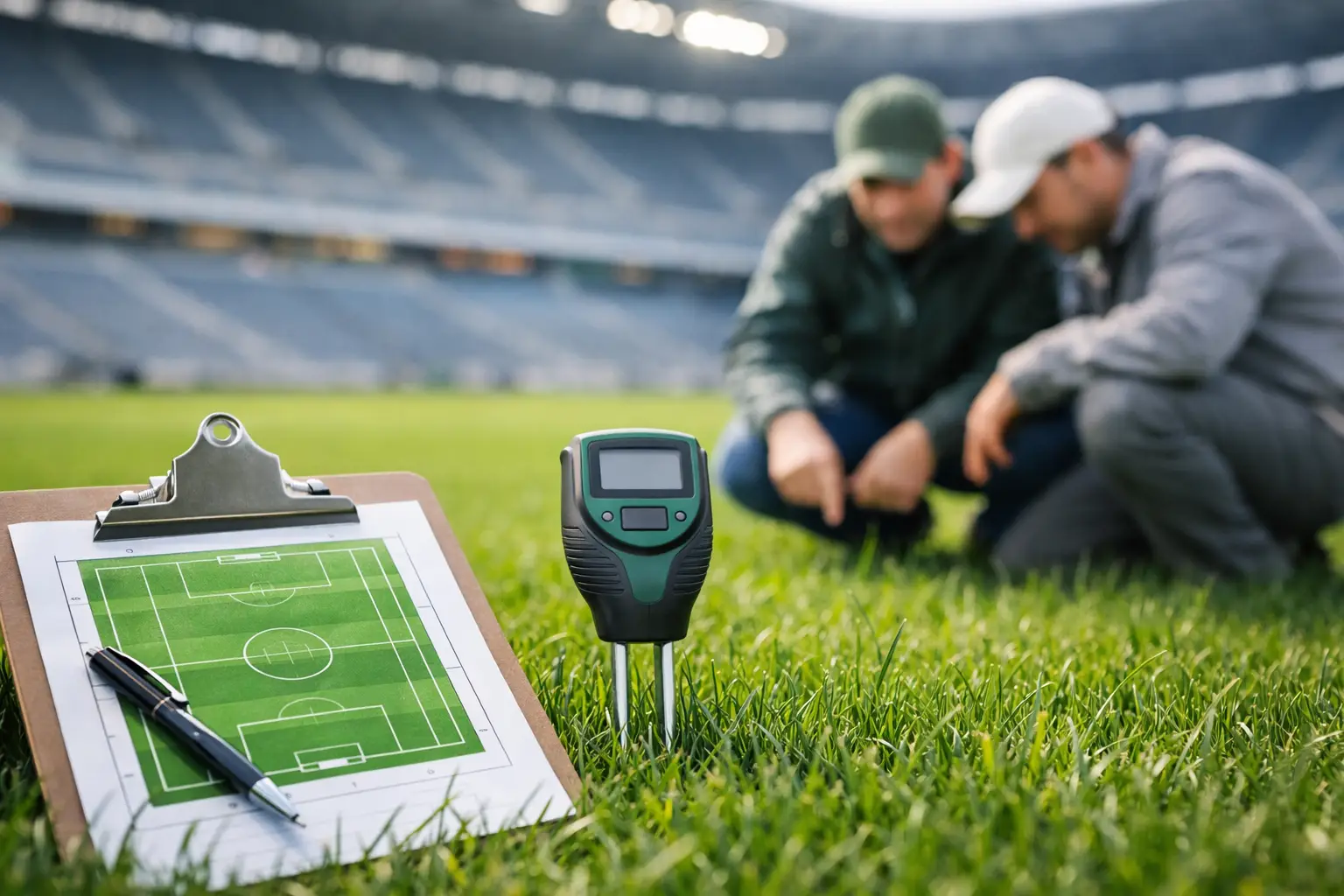
The control begins with measurement. Flow meters, pressure testing, soil-moisture monitoring, station run-time records and regular catch-can assessments establish whether the irrigation system is delivering water evenly and efficiently. Without this baseline, a facility may respond to dry turf by applying more water, when the actual issue is poor distribution, blocked nozzles, pressure loss or hydrophobic soil.
Water-security planning must also account for source reliability. Clubs and councils using dams, bores, recycled water or municipal supply need defined triggers for reduced allocations, contamination events and pump failure. The plan should state which playing areas receive priority, what presentation standard is realistic under restriction, and when management needs to be informed.
There is a trade-off. Monitoring equipment has an upfront cost and data requires interpretation. But blind overwatering is not a low-cost alternative. It consumes water, encourages shallow rooting, increases disease pressure and can weaken surfaces during the periods when resilience matters most.
Set clear irrigation decision rules
A sound irrigation program separates routine scheduling from risk response. Staff should know the moisture range, temperature conditions and visual indicators that trigger hand-watering, syringe cycles, reduced night watering or inspection for dry patch. These rules should be reviewed seasonally, particularly before summer and after irrigation-system changes.
2. Chemical compliance and application discipline
Chemical risk is both a safety and governance issue. Product selection, storage, application, record keeping and disposal must meet legal requirements while protecting staff, players, surrounding environments and the facility’s reputation.
The essential controls are straightforward but demand consistency. Maintain a current chemical register and safety data sheets. Store products in a secure, ventilated and correctly signed area. Restrict access to trained staff. Record every application, including product, rate, area, weather conditions, applicator and relevant withholding requirements. Inspect sprayers regularly and calibrate them so the rate on paper is the rate applied to the turf.
Facilities also need a clear approval process. Decisions should be based on the pest, weed or disease identified, treatment threshold, label direction, weather conditions and expected turf response. Supplier advice can be valuable, but management should retain independent oversight of the agronomic need and commercial outcome.
This matters when budgets tighten. Cutting record keeping or calibration to save time is false economy. One misapplication, staff exposure incident or off-target spray event can create costs far beyond the price of proper controls.
3. Preventive maintenance for critical assets
A turf operation depends on assets that often receive attention only when they fail: pumps, irrigation controllers, valves, weather stations, sprayers, mowers, grinders, drainage infrastructure and vehicles. Reactive maintenance is disruptive, particularly when parts availability is limited or a major event is approaching.
A preventive maintenance schedule should rank assets by operational consequence. If a rough mower is out of action for several days, the impact may be manageable. If a main pump, greens mower or spray unit fails during peak season, the impact can be immediate. These assets require documented inspection intervals, servicing history, condition ratings and contingency arrangements.
Critical spares deserve board-level consideration because they protect operating continuity. The right spare pump drive, controller component, solenoid, cutting unit or hydraulic hose may look like idle inventory until a failure occurs. The decision should be based on lead time, failure likelihood and consequence, not on whether the item is used every month.
4. Surface-performance monitoring and early intervention
Turf decline rarely appears without warning. The warning signs are often present in moisture trends, clipping yield, firmness, disease activity, root depth, infiltration, shade patterns and staff observations. The risk increases when information remains in one experienced employee’s head rather than being recorded and reviewed.
Set performance standards for the surfaces that matter most. On a golf course, that may include green speed, firmness, smoothness, moisture, disease incidence and presentation. For bowling greens, consistency, pace, cover and surface trueness may carry greater weight. Councils and sports venues may focus more heavily on turf cover, hardness, drainage and safe use.
The standard must fit the facility’s budget, climate and membership expectations. Chasing championship firmness every week at a community venue can consume resources without improving the customer experience. Equally, accepting declining standards because staff are busy creates a larger restoration cost later. Good risk management establishes the acceptable range and acts before performance moves outside it.
Build a seasonal risk calendar
A seasonal calendar turns experience into a repeatable system. It should map predictable pressure points such as summer heat, wet-season disease, renovation periods, high-use events, frost, storm exposure and water restrictions. Each period needs planned inspections, input requirements, communication points and decision triggers.
This approach is particularly valuable when staff turnover occurs. A new leading hand or grounds team should not have to learn the site’s highest-risk periods through a preventable failure.
5. Staff capability, safety and decision authority
Many turf risks are people risks. Under-resourced teams may be capable and committed but lack the time, training or authority to perform critical tasks properly. Conversely, unclear direction can lead to staff applying products, changing irrigation programs or deferring repairs without an agreed framework.
Every facility should define who can make operational decisions, who approves material expenditure and who receives escalation when conditions threaten playability or safety. Daily pre-starts, task-specific training, equipment inductions and documented safe work procedures are practical controls, not administrative burdens.
Staff mentoring also reduces dependence on a single experienced operator. When teams understand why a moisture reading matters, how to identify early disease pressure and when to escalate a pump issue, the operation becomes less vulnerable to leave, resignation or recruitment delays.
6. Governance reporting that drives action
Boards do not need a long technical report full of unexplained data. They need a concise view of turf condition, key risks, spending against plan, water use, upcoming decisions and accountability for outstanding actions.
A monthly report should distinguish between routine maintenance matters and strategic risks requiring management attention. For example, repeated irrigation failures, a deteriorating water source, unbudgeted chemical expenditure or a shortage of qualified staff should be reported with the operational consequence, recommended action, cost range and timing.
This structure gives committees confidence that decisions are based on evidence rather than anecdote. It also prevents the common cycle where turf concerns reach the board only after surfaces decline or costs have already escalated.
Controls only work when someone verifies them
The difference between a policy and a control is verification. A chemical register is only effective if it is current. A maintenance schedule only protects assets if work is completed and signed off. A water plan only has value if measurements change decisions on site.
For facilities without a full-time superintendent, independent oversight can provide the discipline needed to keep these controls active. Gen1 Sportsturf works with existing ground staff to establish standards, review evidence, mentor teams and report clearly on the risks that warrant management action.
The immediate priority is not to create more paperwork. It is to identify the few controls that protect your highest-value surfaces, most critical assets and largest operating costs, then test whether they are genuinely working before the next difficult season tests them for you.