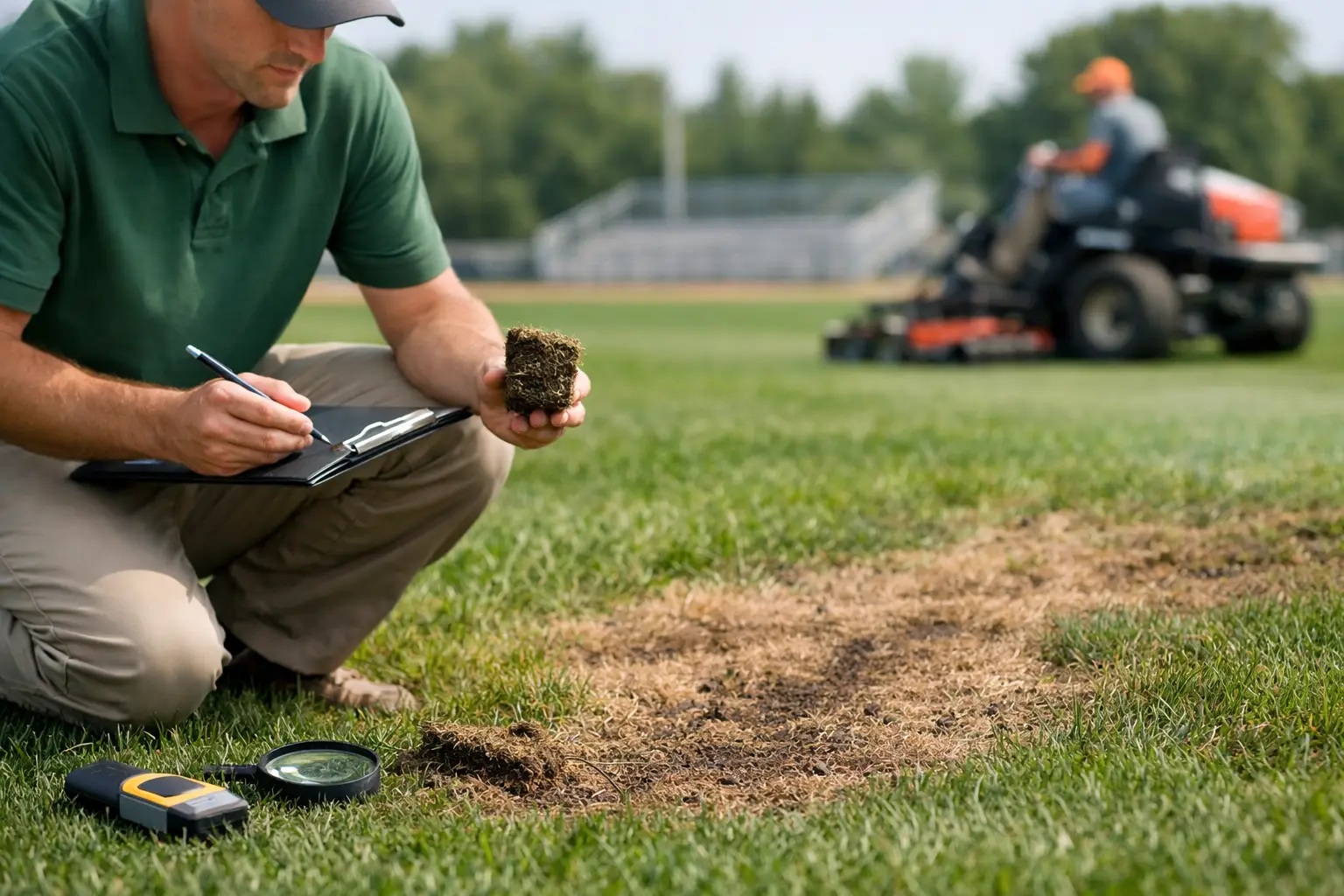
A green that becomes unreliable through summer, a sports field that will not recover between fixtures, or an irrigation bill that keeps climbing is rarely caused by one bad decision. It is usually the result of small technical and operational issues being allowed to compound. Turf audits give boards, managers and ground teams a factual starting point: what is happening, why it is happening, what it is costing, and what must be done first.
For facilities without a full-time Superintendent, that clarity is particularly valuable. Ground staff may be working hard and responding to immediate demands, but without senior oversight, maintenance can become reactive. Inputs rise, standards drift and nobody has a clear line of accountability for the condition of the asset.
What turf audits are designed to uncover
A worthwhile audit is not a walk-around followed by a generic report. It is a structured assessment of the playing surface, the systems supporting it and the decisions guiding day-to-day work. The purpose is to identify the gap between current performance and the standard the facility needs to deliver.
At a golf club, this may mean assessing green firmness, consistency, presentation, drainage performance, irrigation uniformity, shade, disease pressure and maintenance practices. At a bowling club, the focus may sit more heavily on surface pace, levels, thatch, moisture management and seasonal renovation planning. For councils and sports venues, traffic tolerance, recovery capacity, irrigation efficiency, safety and programmed use often carry greater weight.
The technical findings matter, but so does the operating context. A surface cannot be assessed properly in isolation from its budget, staffing structure, equipment condition, water allocation, fixture commitments and member expectations. A recommendation that requires extra labour, capital equipment or a three-week closure is not useful if those constraints have not been considered.
The areas that should be assessed
An effective audit examines the whole maintenance operation rather than blaming the turf alone. That includes agronomy, infrastructure, people and governance.
Surface condition and agronomy
The assessment starts with what players see and feel, then works below the surface. Turf species suitability, root depth, organic matter, compaction, soil profile, nutrient status, pest and disease history, weed pressure and drainage all influence performance. A thin surface may be a fertility issue, but it may equally be the consequence of poor irrigation coverage, excess shade, shallow rooting or repeated traffic.
This distinction matters because the wrong response can be expensive. Applying more fertiliser to turf that is stressed by poor drainage or ineffective wetting practices can increase disease risk without improving density. Renovation work may be necessary, but only after the underlying cause has been established.
Irrigation, water use and drainage
Water is one of the largest controllable costs in Australian turf management, particularly through hot and dry periods. An audit should assess whether the irrigation system is delivering water evenly, whether schedules reflect plant demand, and whether leaks, pressure issues, blocked nozzles or poor controller programming are wasting supply.
Uniformity is only part of the issue. The best irrigation plan for a sand-based green will differ from the plan for a heavily used community oval or a bowling green with restricted water availability. The target is not simply to use less water. It is to put the right amount of water in the right place, at the right time, while maintaining turf health and playing quality.
Drainage must be considered alongside irrigation. Waterlogging, surface sealing and poor fall can create soft, disease-prone areas that persist even when irrigation is reduced. These problems often require targeted capital works rather than another change to the watering roster.
Maintenance systems and resourcing
A good programme on paper can fail when the team does not have sufficient hours, equipment, training or direction to carry it out. An audit reviews mowing, grooming, aeration, topdressing, nutrition, chemical application, renovation and record-keeping practices against the available resources.
This is where practical trade-offs need to be made. A facility may not have the budget to implement every preferred practice immediately. It can still prioritise the work that protects surface health, reduces avoidable expenditure and delivers the greatest improvement to member or user experience.
Equipment capability deserves direct attention. Worn cutting units, poorly calibrated sprayers and unreliable irrigation components do not just create operational frustration. They compromise quality, increase input waste and make it harder for staff to maintain consistent standards.
Compliance, risk and accountability
Chemical storage, application records, safety procedures and staff competency are operational responsibilities, not paperwork exercises. An audit identifies gaps that expose the organisation to risk and establishes the controls needed to address them.
Boards also need clear reporting. They should be able to see the current condition of the asset, the priority risks, planned actions, costs and measurable outcomes. If turf performance is discussed only when complaints arise, management is already behind the issue.
From findings to an action plan
The value of an audit is determined by what happens next. A long list of observations may look thorough, but it does not help a grounds team decide what to do on Monday morning or help a board approve the right expenditure.
The output should separate urgent corrective work from planned improvement. Immediate actions might include correcting a failed irrigation zone, changing a damaging mowing practice, addressing a chemical compliance gap or managing disease pressure. Medium-term work may involve aeration, soil amendment, staff training, seasonal renovation or revised nutrition programmes. Longer-term recommendations can address drainage upgrades, irrigation replacement, equipment investment or changes to the maintenance budget.
Each action should have an owner, a timeframe, an expected cost and a reason for priority. That structure creates accountability. It also stops the common pattern of spending money on visible symptoms while the more important causes remain unresolved.
For example, if a green is soft and inconsistent, the plan may require a short-term moisture-management adjustment, a seasonal hollow-tining and topdressing programme, and longer-term drainage investigation. Treating this as a single irrigation problem would be an oversimplification. Treating it as an undefined “green issue” gives nobody a workable path forward.
When an audit delivers the strongest return
Turf audits are particularly effective at points of change or pressure. A Superintendent departure, deteriorating playing conditions, rising water costs, a major renovation decision or recurring member complaints are obvious triggers. So is a new committee that wants a factual baseline before committing funds.
They are also useful when the facility appears to be coping. A stable surface can conceal inefficient irrigation, increasing disease risk, inadequate records or maintenance practices that will fail under a tougher summer or heavier fixture schedule. Identifying those weaknesses early is cheaper than responding after the surface declines.
The required depth depends on the facility. A bowling club may need a focused assessment that resolves immediate performance and resource issues. A multi-field council site or golf club may require a broader diagnostic review, including infrastructure, staffing, budget and annual works planning. The key is matching the audit scope to the decision that needs to be made.
Independent advice changes the quality of decisions
An audit should not be shaped by a need to sell fertiliser, chemicals, irrigation hardware or machinery. Independent advice allows management to assess recommendations on their operational merit, cost and likely result.
That independence is central to Gen1 Sportsturf’s approach. The goal is to give existing staff clear strategic direction, not replace practical knowledge with theory or create dependence on more products. Strong turf management combines disciplined standards with decisions that make commercial sense for the facility.
A senior review also provides a useful layer of challenge. It can test whether recurring expenditure is justified, whether staff are being asked to deliver an unrealistic standard with available resources, and whether capital works will solve the stated problem. Sometimes the right answer is investment. Sometimes it is a better maintenance system and clearer supervision.
Make the audit a management tool, not a one-off event
The initial audit establishes the baseline, but performance improves through follow-through. Priorities need to be reviewed against seasonal conditions, completed works, budget movement and surface response. Monthly reporting and periodic site reviews keep the plan live and make it possible to adjust before a minor issue becomes a costly recovery project.
For boards and managers, this creates confidence that turf spend is directed by evidence rather than habit. For ground teams, it provides practical priorities and access to senior guidance. For members and users, the result is a more reliable surface and a facility that looks properly managed.
The most useful question is not whether the turf looks acceptable after rain or before a major event. It is whether the facility has a clear, accountable system for maintaining that standard through the next season.