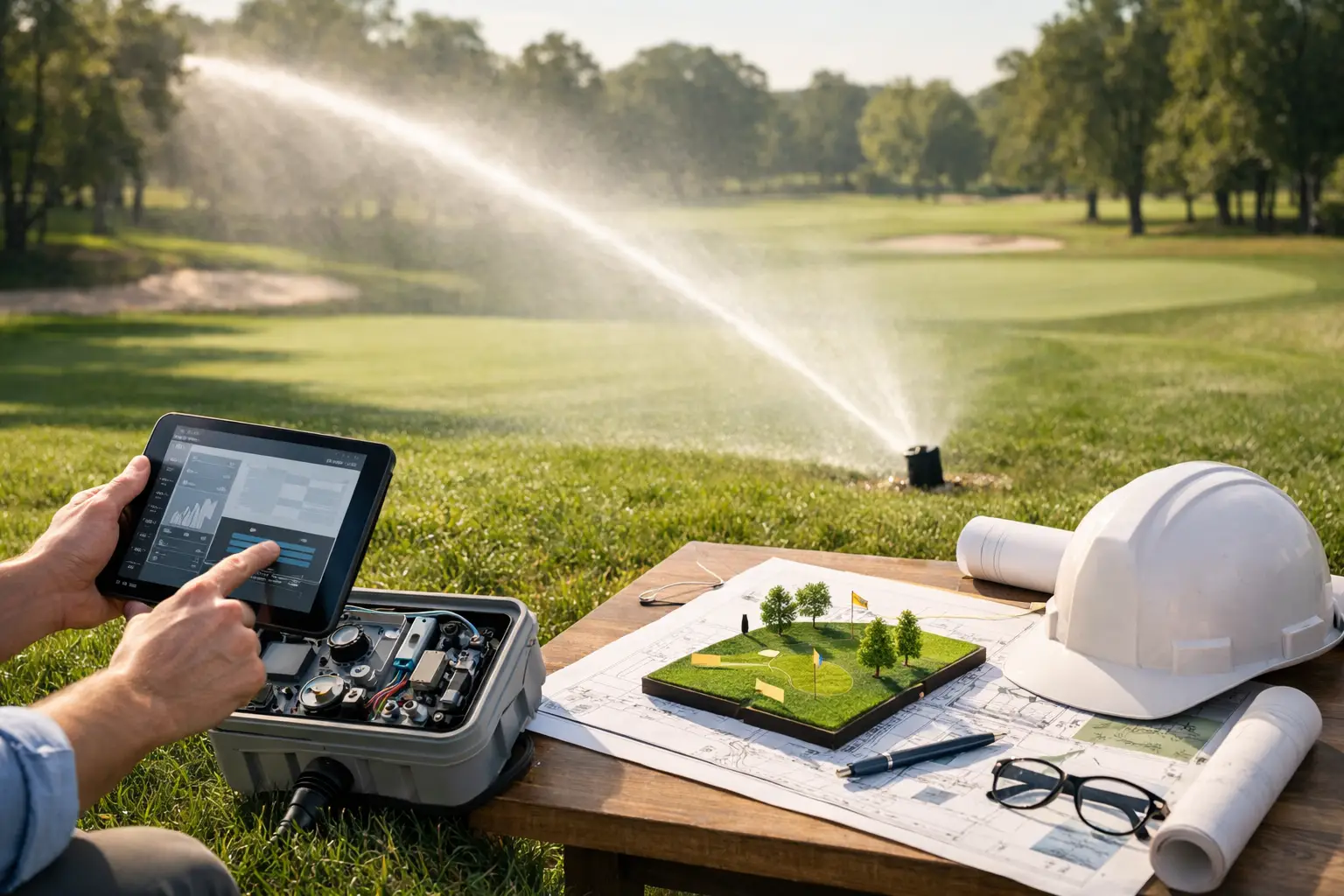
A failed irrigation cycle at 3 am can cost a club more than water. It can mean stressed turf, cancelled play, member complaints, reactive labour and difficult questions at the next board meeting. Turf automation adoption is increasingly being considered as a response to these pressures, but technology alone does not create better surfaces or better decisions.
For golf clubs, bowling clubs, councils and sports facilities, automation should be treated as an operating model decision. The value lies in applying consistent standards, capturing useful information and giving the right people clear authority to act. Without that discipline, a new controller, sensor network or weather station can simply automate poor practice at greater speed.
Why turf automation adoption is accelerating
Water costs, labour shortages and member expectations have changed the operating environment. Facilities are expected to present reliable playing surfaces while managing tighter budgets, environmental scrutiny and ageing infrastructure. A skilled superintendent can balance these demands, but many venues cannot recruit or fund that level of full-time leadership.
Automation can help close part of the gap. Modern irrigation control systems can schedule watering by station, respond to weather data, monitor flow and identify faults. Soil moisture sensors can show whether water is reaching the rootzone rather than merely wetting the surface. Remote access can allow managers to check an irrigation event before arriving on site.
These are useful capabilities. They are not a substitute for turf knowledge.
A moisture reading does not decide whether a green should be hand-watered before a heat event. A weather forecast does not account for local shade, wind exposure, soil profile, root depth, compaction or a recent renovation programme. The best outcomes come when automation supports experienced judgement and disciplined daily observation.
Start with the business case, not the equipment
The first question for a board should not be, “Which system should we buy?” It should be, “Which operational risk are we trying to reduce?” The answer differs between a metropolitan golf course, a regional bowling club and a council sports precinct.
For one facility, the priority may be water loss from undetected leaks and inefficient night watering. For another, it may be reducing the time a small greenkeeping team spends manually operating irrigation. A council may need better reporting to demonstrate responsible water use across multiple sites. The technology selection should follow that problem definition.
A credible business case identifies the current baseline: annual water use, water cost, labour hours spent on irrigation adjustments, known leak history, surface complaints, pump run time and capital maintenance exposure. It then sets a realistic target. “Use less water” is not a management target. “Reduce potable water use by 12 per cent without a decline in playing quality” is a target that can be measured and reviewed.
The same principle applies to labour. Automation may reduce repetitive controller adjustments, but it will not eliminate the need for inspection, hand-watering, nozzle maintenance, valve repairs and agronomic decision-making. Promising labour savings that cannot be realised in rosters creates disappointment and weakens the case for future investment.
Automation needs defined operating standards
A controller can only follow the parameters it is given. If those parameters have been set without a clear irrigation strategy, the facility is relying on an expensive timer.
Before commissioning new technology, management should establish the standards that will govern its use. This includes preferred soil moisture ranges for key playing areas, watering priorities during restrictions, acceptable irrigation windows, pump limits, response times for alarms and the authority to override programmed schedules. These standards should be documented, understood by the team and reviewed through seasonal change.
Make zones reflect actual turf conditions
Irrigation zones are often a legacy of installation rather than a reflection of current conditions. One valve may serve sunny and shaded turf, different soil types, high-wear entries and low-use rough. Applying one schedule across that mix guarantees overwatering somewhere and under-watering elsewhere.
A practical automation project examines whether critical zones are grouped sensibly, whether nozzles are performing as intended and whether pressure is sufficient. In some cases, a full controller upgrade is justified. In others, the best first investment is an irrigation audit, nozzle replacement, valve repairs or better zoning. Capital should follow evidence, not sales pressure.
Treat sensors as decision support
Sensors are valuable when their placement, calibration and interpretation are managed properly. A poorly located soil moisture sensor can produce data that looks precise but has little relevance to the broader surface. One sensor in an atypical dry patch should not determine the programme for an entire fairway.
Use sensor data alongside visual assessment, weather records, irrigation run times and turf response. Place sensors in representative areas and, where budgets allow, compare a known dry location with a typical location. Establish who reviews the readings, how often they are reviewed and what action follows a variance. If no one owns that process, the data will soon become another unattended dashboard.
The accountability question boards cannot overlook
Remote access can create an unhelpful assumption that everyone is responsible for irrigation. In practice, that can mean no one is accountable when a setting changes, an alarm is ignored or a schedule remains active after rainfall.
Every facility needs a clear chain of responsibility. Ground staff should know who can alter programmes, who receives alerts, who checks faults and who approves significant changes to water strategy. General managers and boards need concise reporting that translates technical activity into operational outcomes: water use, cost trend, exceptions, risks and planned corrective action.
This is particularly important where a club relies on a small team, volunteers or contractors. Automation can reduce dependence on one person remembering every irrigation adjustment, but only if procedures are simple and recorded. Access permissions, alarm contacts and seasonal programmes should not sit solely in one person’s mobile phone or memory.
Independent oversight has a place here. An external turf consultant can test whether reported savings reflect genuine efficiency or simply reduced water applied at the expense of turf health. They can also provide the board with an objective view of deferred maintenance, compliance exposure and the condition of the underlying irrigation asset.
A staged approach reduces cost and disruption
Large technology projects can be justified, especially where irrigation infrastructure is failing or water use is materially out of control. But a staged programme is often the more commercially sound route.
Begin with a diagnostic audit of irrigation performance, controller capability, water supply, pump operation, coverage, known faults and current management practices. Establish the baseline before committing to a technology platform. This audit may show that immediate savings are available through scheduling, pressure correction, leak repairs and staff training.
The next stage can focus on the highest-value areas. At a golf facility, that may mean greens, tees and high-traffic approaches. At a bowling club, it may mean the green and surrounds. At a sports venue, it may be the main field rather than every open space across the site. A pilot allows staff to learn the system, validate the data and demonstrate results before broader capital expenditure.
Once the system is operating, monthly review matters more than installation day. Compare water use against weather conditions and playing demands. Review alarms and fault response. Check whether staff are making better decisions or simply following recommendations without challenge. Automation should improve the quality of management conversations, not replace them.
The trade-offs are real
Automation adds capability, but it also adds dependency on communications, power, software support and staff competence. Older sites may face integration issues between controllers, pumps, flow meters and sensors. Subscription costs, replacement parts and cybersecurity requirements should be included in whole-of-life budgeting.
There is also a risk of false confidence. A system can report that an irrigation cycle completed while a blocked nozzle, failed solenoid or pressure issue leaves turf dry. Site inspections remain non-negotiable. The aim is not to remove people from the process. It is to direct skilled people towards the checks and decisions that protect surface quality.
For facilities under financial pressure, the right answer may be improved irrigation management rather than immediate full automation. For others, particularly those facing high water bills, recurring faults or limited on-site coverage, a well-governed automation upgrade can deliver a strong return. The difference is the quality of the planning and follow-through.
Good turf management has always relied on observation, timing and accountability. Technology should make those disciplines easier to apply, easier to measure and harder to overlook. Start with the operational problem, set the standard, assign ownership and let the equipment earn its place in the budget.