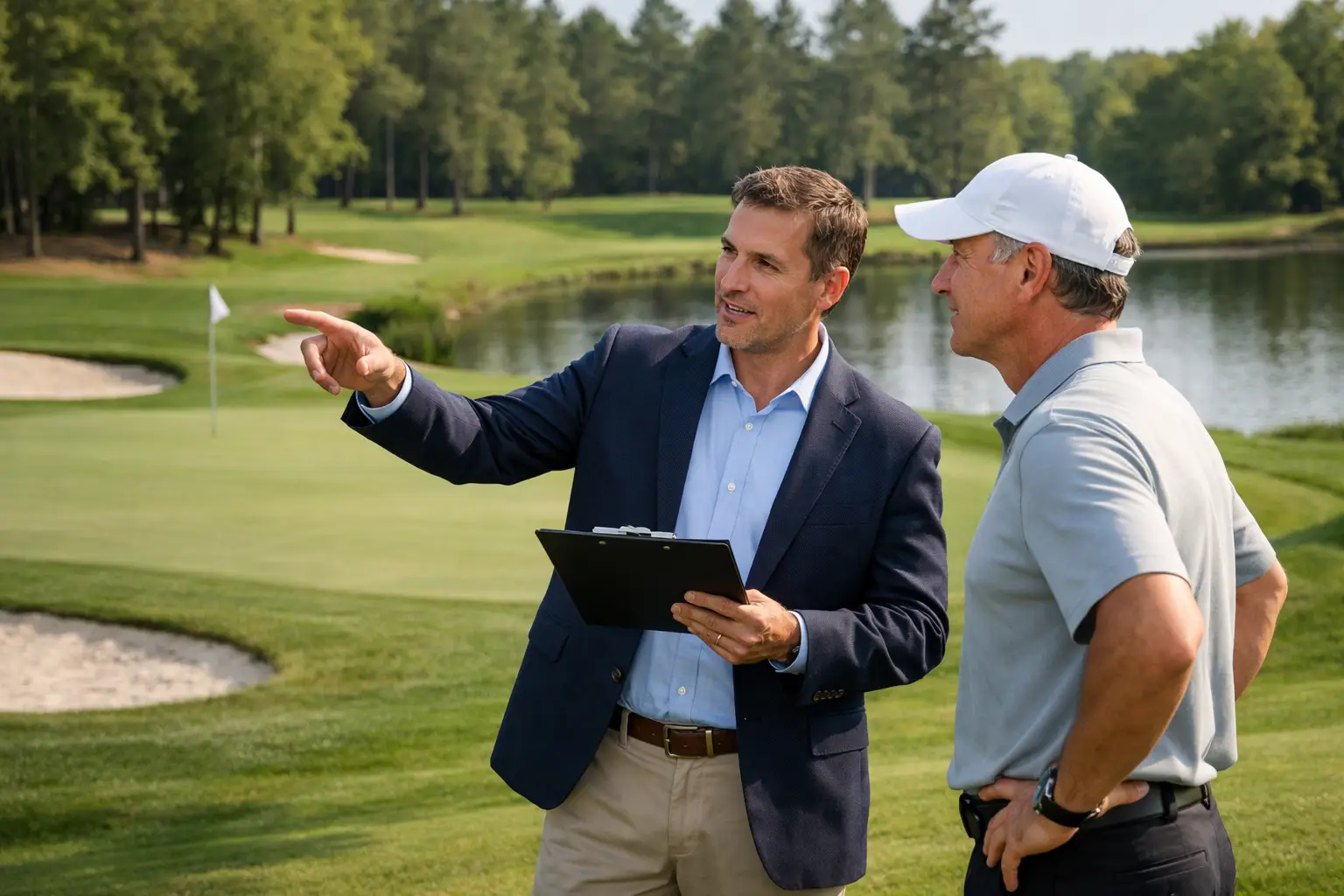
A superintendent leaves, irrigation costs climb, greens lose consistency and the committee starts receiving more member complaints. At that point, a golf course consultant is not an optional extra. It can be the most commercially sensible way to restore leadership, set standards and give the club a defensible plan without immediately carrying the cost and recruitment risk of a full-time senior appointment.
For many Australian clubs, the issue is not a lack of effort from the greenkeeping team. It is a lack of senior strategic oversight. Staff may be working hard every day, but without a clear maintenance programme, irrigation strategy, budget discipline and technical direction, work becomes reactive. Inputs rise, problems repeat and the course gradually falls short of the standard members expect.
What a golf course consultant actually does
A credible consultant does far more than inspect turf and issue a report. The role is to provide the leadership framework normally expected from an experienced superintendent or agronomist, while working alongside the club’s existing people.
That starts with an honest diagnosis. Turf condition, soils, irrigation performance, machinery capability, staffing structure, chemical practices, budgets and course presentation all need to be assessed together. A green with poor density may be a nutrition issue, a water issue, a shade issue, a compaction issue or a maintenance timing issue. Treating the visible symptom without identifying the operating cause wastes money.
From there, the consultant should establish a practical plan: what must be fixed now, what can be scheduled over the season, what should be budgeted for next year and what the team needs to measure. The best advice is independent, site-specific and clear about priorities. It should not be shaped by product sales, supplier incentives or generic programmes copied from another course.
For boards and general managers, the value is equally important. A golf course consultant translates technical work into operational risk, financial implications and measurable outcomes. That gives decision-makers clearer grounds for approving expenditure, deferring non-essential work or addressing problems before they become capital projects.
The situations where external leadership delivers value
Not every club needs the same level of support. A well-resourced championship facility with an established superintendent may only need targeted technical advice. A regional club with a lean team, ageing infrastructure and no senior turf leader may require ongoing fractional support.
The most common trigger is a leadership gap. Recruiting experienced superintendents is difficult, particularly for facilities that cannot offer a metropolitan salary package, housing support or a large team. Leaving the role vacant for months can cost more than it appears. Turf declines gradually, staff lose direction, irrigation faults go unresolved and maintenance decisions are made without a long-term view.
A consultant can provide immediate structure while the club decides whether a permanent appointment is realistic. In some cases, the fractional model remains the better long-term answer. The club retains its on-ground crew and gains senior guidance without the full cost of a six-figure employment package, vehicle, leave cover, superannuation and recruitment overhead.
Rising costs are another clear indicator. Water, power, fertiliser, chemicals, labour and machinery repairs all require disciplined control. Cost reduction should never mean simply cutting inputs. Reducing fertiliser without understanding plant demand, for example, can weaken turf and create larger recovery costs. The right approach is to improve timing, application accuracy, irrigation scheduling, procurement discipline and labour allocation.
Courses experiencing inconsistent playing surfaces also benefit from independent review. Members notice green speed, firmness, bare areas, bunker presentation and wet patches long before a committee sees a maintenance report. The consultant’s job is to connect those visible outcomes with the technical systems behind them, then make the required changes achievable for the staff on site.
Why a monthly retainer model is often stronger than a one-off report
A one-off audit can identify issues, but it does not create accountability. Turf management is seasonal and conditions change quickly. A programme that is right in late autumn may need adjustment after a hot, humid summer, heavy rainfall or water restrictions.
Ongoing advisory support allows the consultant to review results, challenge assumptions and keep the club focused on the plan. It also gives course staff access to senior guidance when decisions need to be made quickly, rather than waiting until a problem has become expensive.
A disciplined monthly arrangement should include regular site inspections at an agreed frequency, written priorities, maintenance and irrigation review, budget input, staff mentoring and concise reporting for management or the board. The detail will vary according to the facility, but the accountability should not. Everyone should know who is responsible for each action, when it is due and how success will be assessed.
This structure is particularly effective for clubs with capable greenkeepers who need leadership rather than replacement. The consultant sets the standard, provides the system and supports technical decisions. The on-ground team carries out the work, builds confidence and develops capability over time.
What boards should expect from a consultant
Boards should not accept vague observations such as “improve irrigation” or “apply more fertiliser”. They need recommendations that identify the risk, explain the proposed action, nominate a timeframe and state the likely cost or operational impact.
A useful board report may address course condition, major risks, water use, staffing, chemical compliance, machinery priorities, budget variance and capital works planning. It should distinguish between essential expenditure and desirable upgrades. That is how a committee avoids approving work based on urgency alone.
The consultant also needs the authority to be candid. If the club’s expectations exceed its budget, staffing level or irrigation capacity, that should be stated plainly. There is no value in promising championship presentation while funding a basic maintenance programme. Good turf management starts with an agreed standard and resources that can realistically deliver it.
Independence matters here. Advice should be based on what the course needs, not on what a supplier wants to sell. When a recommendation involves a significant investment - such as pump upgrades, drainage works, new machinery or a change in grass species - the club should receive a clear rationale, alternatives and the consequences of doing nothing.
The operational disciplines that protect course quality
Strong consulting is built on repeatable management disciplines, not occasional expert visits. The priorities usually include water management, agronomic planning, people leadership and compliance.
Water management
Irrigation is often the largest controllable variable in turf performance and operating cost. A consultant should review scheduling practices, pump performance, pressure, coverage, leaks, central control settings and the use of moisture data. More water is rarely the answer. The goal is to apply water accurately, preserve plant health and maintain firm, consistent playing surfaces.
Agronomic planning
Nutrition, soil amendments, aeration, topdressing, growth regulation, pest management and renovation work must operate as a programme. Each decision affects the next. Overfeeding may produce colour in the short term but weaken firmness and increase disease pressure. Delaying core maintenance may protect play for a week but compromise surface quality for months.
Staff capability
Even the best plan fails if it is not understood on the ground. Senior oversight should include mentoring, clear work standards and regular review with the course team. This is not about adding bureaucracy. It is about making sure labour is directed to the work that protects playing quality, reduces rework and builds technical confidence.
Chemical and safety compliance
Chemical storage, application records, training, personal protective equipment and environmental controls are governance issues as well as operational ones. Poor compliance exposes the club, staff and committee to unnecessary risk. A consultant should ensure systems are current, practical and consistently followed.
Choosing the right golf course consultant
Credentials matter, but they are not enough on their own. Look for someone with direct experience in conditions comparable to your course, a record of leading teams, and the ability to communicate with both greenkeepers and boards. Elite-event experience can be valuable because it demonstrates standards under pressure, but the adviser must also understand the financial reality of a member-based or public-access facility.
Ask how the consultant will measure progress. If the answer is limited to subjective comments about presentation, the engagement is too loose. Measures may include water consumption, turf density, green performance, input costs, completion of planned works, maintenance backlog and budget performance.
Also ask how often they will be available, who will execute the plan and how recommendations will be reported. The relationship works best when roles are explicit. The consultant provides direction and accountability; the club provides access, timely decisions and a team prepared to follow the agreed programme.
Gen1 Sportsturf applies this model through independent diagnostic audits and fractional senior turf leadership designed for clubs that need stronger outcomes without carrying a full-time executive cost.
The right consultant will not promise instant perfection. They will establish the baseline, identify the highest-value actions and build a system that keeps the course improving after the first problem has been fixed. That is the standard worth taking to the board.