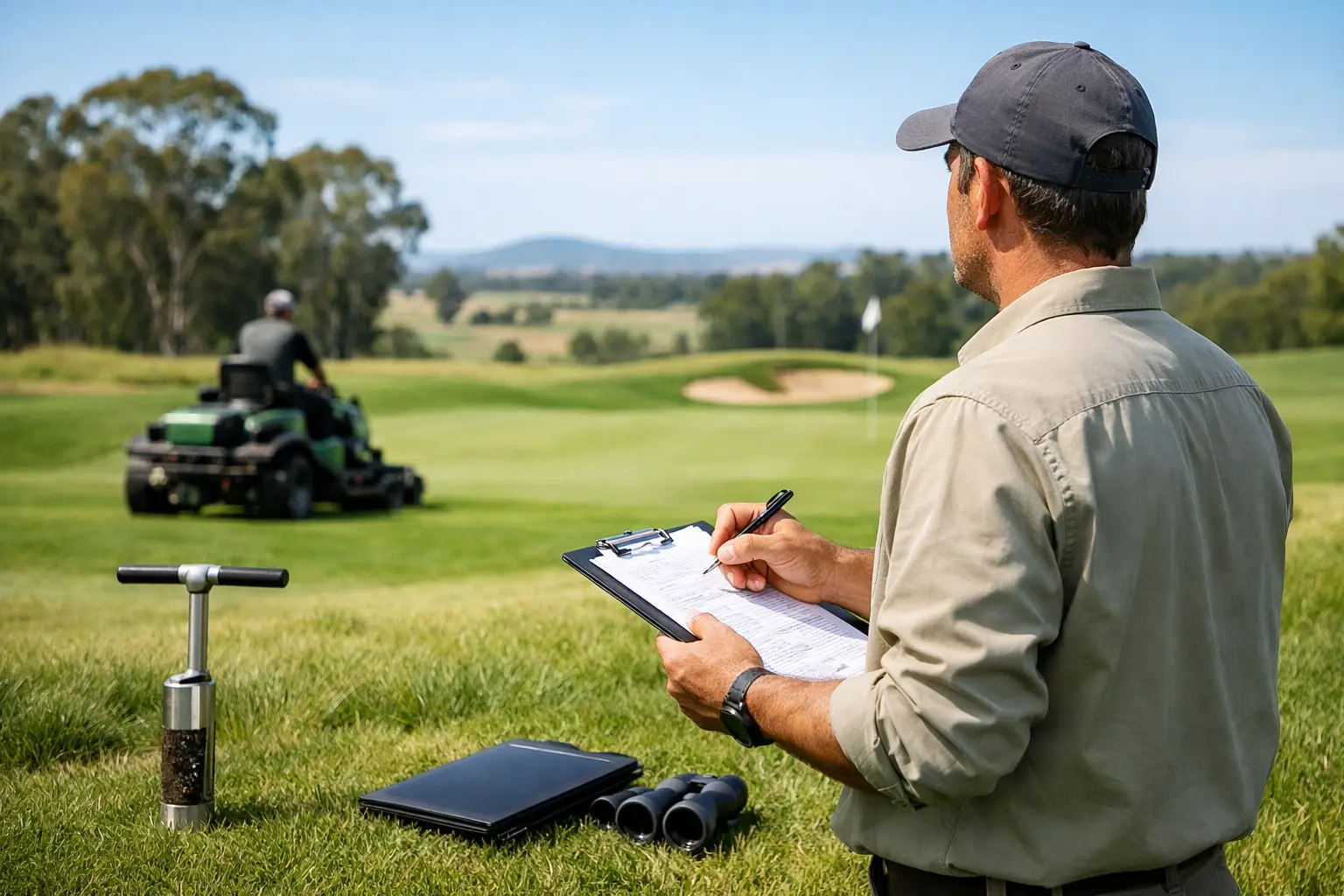
When turf performance drops, the first sign is rarely the grass. It shows up in member complaints, rising water use, inconsistent presentation, deferred works and ground staff carrying decisions they were never hired to make. That is where a turf management consultant Australia facilities can rely on becomes a commercial decision, not just an agronomic one.
For golf clubs, bowling clubs, councils and sporting venues, turf quality sits right at the intersection of reputation, cost control and operational risk. The challenge is that many facilities need senior turf leadership but cannot justify, recruit or retain a full-time Superintendent. In the current labour market, that gap is becoming more common, not less.
A consultant can close that gap, but only if the role is defined properly. Good consultancy is not occasional advice from the sideline. It is structured oversight, measurable standards and clear accountability that improve the performance of both the surface and the people managing it.
What a turf management consultant in Australia should actually do
A proper turf management consultant in Australia should bring strategic control to the whole operation. That means reviewing current conditions, setting standards, identifying risk, building a practical maintenance plan and making sure the plan is executed consistently by the on-site team.
The value is not in producing a polished report that sits in a drawer. The value is in decision quality. Fertiliser timing, irrigation scheduling, renovation planning, disease response, chemical compliance, labour allocation and presentation standards all have cost implications. Poor calls compound quickly. Good calls protect budget and playing quality at the same time.
At a board or management level, a consultant should also provide something many facilities are missing - credible reporting. Decision-makers need clear explanations of what is happening, what it will cost, what the risks are and what improvement looks like over time. Without that, turf becomes reactive and political.
When engaging a turf management consultant Australia makes sense
The clearest trigger is a leadership gap. A Superintendent has left, the current team is stretched, or the venue has promoted from within but still needs senior oversight. In these situations, the facility does not just lose technical knowledge. It loses planning discipline, procurement judgement, irrigation scrutiny and the ability to communicate confidently with committees or boards.
There are other signs too. Water use creeps up without a clear reason. Inputs increase but surface quality does not. Staff work hard but remain stuck in firefighting mode. Renovations are postponed because no one is certain on timing or scope. Presentation becomes inconsistent across seasons. If this sounds familiar, the issue is usually not effort. It is leadership structure.
For councils and multi-site operators, the case can be even stronger. A consultant can standardise maintenance planning, compliance oversight and reporting across several venues without the overhead of a senior full-time role at each site.
Fractional leadership versus a full-time hire
This is where many boards hesitate. They know they need expertise, but they assume the only credible solution is a permanent executive-level appointment. Sometimes that is true. If a facility has the scale, budget and operational complexity to support a full-time Superintendent, that can be the right model.
But many clubs and public facilities sit in the middle. They need championship-grade standards and senior judgement, yet a six-figure salary package is out of step with their revenue base. In that case, fractional leadership is often the more disciplined option.
A retained consultant provides high-level oversight, planning and accountability while the existing grounds team executes the program. You are not paying for senior presence every day. You are paying for senior decision-making where it matters most. That distinction matters commercially.
It also reduces recruitment risk. The market for experienced turf leaders is tight. A venue can spend months searching, compromise on capability, or overpay to fill a role. A consultant model allows facilities to secure proven leadership immediately while keeping structure flexible.
What good consultancy looks like on the ground
The best consultants do not create dependence. They build systems and lift capability inside the existing team. That usually starts with a diagnostic review - current turf condition, irrigation performance, labour structure, input programs, equipment constraints, compliance exposure and seasonal priorities.
From there, the consultant should set a clear operating framework. What standard is the facility aiming for? What work is essential, what can be deferred and what is wasting money? Who owns which decisions? How is success measured monthly, seasonally and annually?
At ground level, this often includes maintenance calendars, irrigation analysis, renovation planning, spray program oversight, budgeting support and mentoring for staff. For committees and boards, it should include plain-English reporting tied to cost, risk and outcomes.
That balance matters. Turf teams need practical direction they can execute. Boards need confidence that the operation is under control. One without the other creates friction.
Independence matters more than many venues realise
One of the biggest advantages of an independent consultant is that the advice is not tied to product sales. That sounds obvious, but it has real consequences.
When recommendations are influenced by a supplier relationship, facilities can end up overapplying inputs, replacing systems too early or chasing products when the real issue is process, irrigation or labour allocation. Independent advice keeps the focus where it belongs - on performance, efficiency and risk.
For boards, independence also strengthens governance. When a recommendation comes with supporting data, clear reasoning and no sales agenda, it is easier to approve spending with confidence. That is particularly important when capital works, irrigation upgrades or program changes are involved.
How to assess whether a consultant is worth it
Do not judge value by how often someone visits the site. Judge value by what improves under their oversight.
The right consultant should help stabilise playing surfaces, tighten maintenance planning, improve irrigation efficiency, sharpen chemical compliance and give staff clearer direction. Over time, you should see better consistency, fewer avoidable problems and stronger alignment between budget and surface quality.
Some benefits are easy to measure. Water use, chemical spend, labour allocation and contractor costs can all be tracked. Others require discipline to assess properly. Member satisfaction, presentation consistency, staff confidence and board trust are still commercial outcomes, even if they do not sit neatly in one spreadsheet.
The trade-off is that consultancy is not magic. If the site has major infrastructure failures, inadequate staffing or unrealistic expectations from governance, a consultant cannot fix everything by issuing better instructions. The model works best when ownership, management and the on-site team are willing to follow a plan and be accountable to it.
The questions decision-makers should ask
Before appointing any turf management consultant Australia service, ask direct questions. What standards will be set? How will the site be assessed? What reporting will management receive? How will staff be supported? What decisions stay on site, and what decisions require consultant oversight?
You should also ask how the consultant handles risk. Irrigation inefficiency, chemical compliance, deferred maintenance and poor documentation all create exposure. If the answer is vague, the service probably is too.
Experience matters, but so does structure. A long career in turf is valuable only if it translates into practical systems, financial discipline and clear communication. Facilities need more than agronomy. They need leadership.
That is why the strongest consultancy models are usually ongoing rather than one-off. A single audit can identify issues. It cannot enforce standards, support staff through seasonal pressure or keep management informed as conditions change.
Why this model is gaining traction across Australian facilities
The Australian turf sector is dealing with a familiar set of pressures - constrained labour, rising operating costs, tighter compliance expectations and stronger scrutiny from members, users and boards. Facilities are expected to present better surfaces with fewer resources and less room for error.
That environment favours models built around senior oversight without full-time executive overhead. It is a practical response to a structural problem. Rather than waiting for the perfect hire, venues can put credible leadership in place now and give their team a framework to perform inside.
This is especially relevant across Queensland, New South Wales and Victoria, where climate variability, water pressure and high presentation expectations combine to make turf management more demanding. A consultant with proven systems and independent judgement can bring stability where many operations are currently running on effort alone.
Gen1 Sportsturf fits that brief by providing fractional Superintendent services built around accountability, reporting and operational improvement rather than product-driven advice. For facilities that need elite standards without the full-time salary burden, that structure makes practical sense.
The right consultant should leave a venue calmer, clearer and more in control. Not because the work becomes easy, but because the operation finally has senior direction behind it. For any club or facility facing a leadership gap, that is often the difference between managing turf and managing risk.