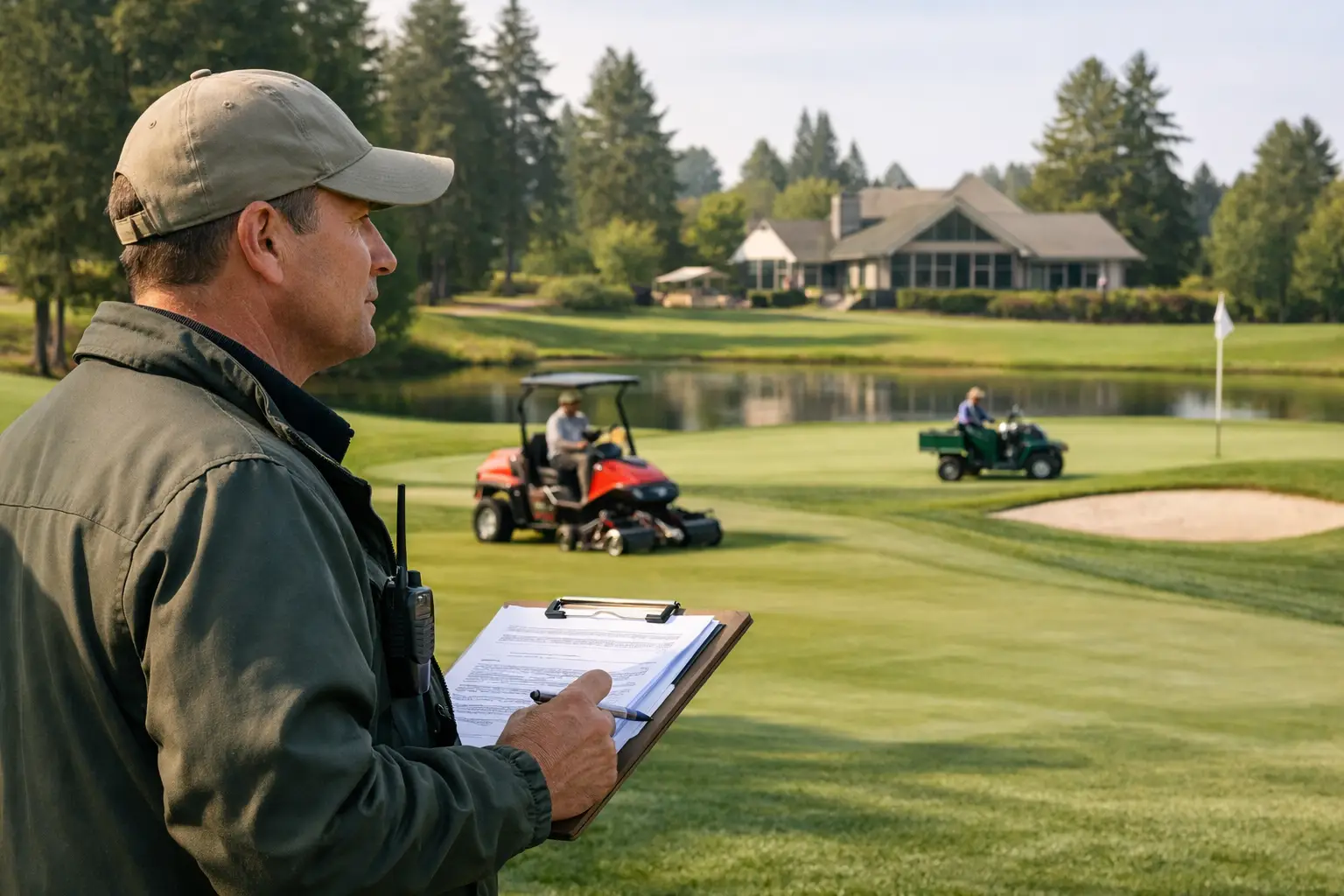
A Superintendent vacancy is not the only reason to ask the question. Boards often search for “when does a club need superintendent” support after turf quality has slipped, water costs have risen, staff are stretched, and member complaints have become harder to answer. By then, the issue is usually bigger than mowing schedules or a patchy green. It is a leadership and accountability gap.
A club needs Superintendent-level capability when turf decisions begin carrying material operational, financial or reputational risk. Whether that capability requires a full-time appointment, an experienced course manager, or fractional senior oversight depends on the size, complexity and condition of the facility.
When Does a Club Need a Superintendent?
The short answer is when the facility needs someone who can set standards, make informed trade-offs and be accountable for the condition of the playing surface. A competent maintenance team is essential, but it is not the same as having senior turf leadership.
At golf clubs, this distinction is most obvious around greens performance, irrigation, renovation programmes, chemical planning and tournament preparation. At bowling clubs and sports venues, it often appears in surface consistency, water management, disease pressure, safety and the ability to keep facilities open through difficult weather.
A Superintendent is not simply the person who knows how to operate machinery or apply products. The role is responsible for turning budgets, people, weather data, irrigation capacity and member expectations into a practical maintenance plan. That requires technical judgement, planning discipline and clear reporting to management or the board.
The Warning Signs Are Usually Operational First
Turf decline rarely arrives as one dramatic failure. More often, a club starts accepting poorer outcomes as normal: slower recovery after play, inconsistent presentation, recurring dry spots, preventable disease outbreaks or increasing reliance on reactive work.
The following signs indicate a club needs experienced Superintendent-level direction:
- The maintenance programme changes week to week because there is no documented annual plan, clear priorities or agreed performance standard.
- Irrigation decisions are based on habit rather than soil moisture, weather conditions, system capability and plant requirements.
- Fertiliser, chemical and contractor costs are rising without a clear explanation of the result being achieved.
- Greenkeeping staff are working hard but lack mentoring, task sequencing and confidence in technical decisions.
- The board receives updates only when there is a problem, rather than concise reporting on condition, risk, spend and upcoming works.
- Turf quality depends heavily on one individual who has no support structure, succession plan or senior review.
Any one of these issues can be managed. Several occurring together point to a structural problem. The club is operating without enough technical leadership for the standard it expects to deliver.
Turf Quality Is a Business Issue, Not a Cosmetic One
Boards can be reluctant to add management cost when the course or venue remains open and staff appear busy. That is understandable, particularly when membership, labour, machinery and water costs are under pressure. But delayed technical leadership often creates more expensive decisions later.
Poor irrigation strategy can waste water while still leaving stressed turf. Weak renovation planning can extend recovery periods and reduce playing quality. Inadequate chemical compliance can expose the club to legal and safety risk. A lack of staff development can turn a capable team into a reactive crew that spends each week catching up.
For member-based clubs, surface condition also affects retention, visitor rounds, competition quality and the committee’s credibility. At council and public facilities, the consequences include user satisfaction, asset life, public safety and scrutiny over expenditure. Turf performance is therefore not separate from commercial performance. It is one of the factors that shapes it.
Full-Time Superintendent or Fractional Leadership?
Not every club needs, or can justify, a full-time Superintendent. The right model depends on the operational load.
A large golf club with extensive irrigation infrastructure, high rounds, multiple playing surfaces, a substantial maintenance workforce and regular event commitments may require a full-time leader on site. There is enough daily coordination, staff management and capital planning to warrant the role.
A smaller regional club, bowling club, council reserve or sports facility may have capable staff but not the budget or workload for a six-figure Superintendent appointment. That does not mean it should operate without strategic oversight. It means the leadership model needs to match the facility.
Fractional consulting support can provide senior direction without full-time executive overhead. Under this approach, the existing team continues the daily work while an experienced turf leader sets the maintenance strategy, reviews performance, analyses irrigation, guides chemical and nutrition programmes, mentors staff and reports to decision-makers.
This arrangement is not a substitute for labour. It will not fix an under-resourced maintenance budget or replace hands needed on the ground. Its value is in ensuring available labour, water and spend are directed towards the right work, in the right order, with clear accountability.
The Recruitment Test: Can the Club Hire the Right Person?
The question is not only whether a club can afford a full-time Superintendent. It is whether it can attract, support and retain the right person.
Experienced turf professionals are in limited supply, particularly those with the technical depth to manage irrigation, agronomy, people, budgets, compliance and board communication. A rushed appointment can create a costly cycle of turnover, inconsistent programmes and loss of staff confidence.
Before recruiting, boards should be clear about what the role genuinely requires. Is the club seeking a hands-on working supervisor, a technical agronomist, a people manager, a capital-project lead or all four? If the answer is all four but the salary and support package only suits a junior role, the recruitment process is unlikely to solve the underlying issue.
In some cases, an external diagnostic period is the sensible first step. It gives the club an independent view of turf condition, irrigation performance, staff capability, maintenance systems and budget priorities before it commits to a permanent structure.
What Good Superintendent Leadership Looks Like
Effective turf leadership should be visible in the operation, not just in a job title. The team should know the weekly priorities and the reasons behind them. The annual calendar should account for renovation, nutrition, irrigation, pests, disease, events and recovery periods. Records should support decisions rather than sit unused in a folder.
For management and boards, good leadership means receiving information that is useful for decisions. That includes current turf condition, emerging risks, expenditure against plan, water use, staffing constraints and recommended actions. It avoids vague assurances and surprises at the end of the financial year.
There also needs to be discipline around independence. Product choices, contractor recommendations and capital priorities should be based on site needs, data and whole-of-life cost, not sales incentives or personal preference. This is particularly valuable where budgets are tight and every recommendation must stand up to scrutiny.
A Practical Decision Framework for Boards
A club should consider a full-time Superintendent role when turf management demands daily senior coordination, the team is large enough to require active leadership, and the facility’s complexity or revenue exposure makes a part-time model insufficient.
It should consider fractional Superintendent-level support when it has an existing crew, needs stronger systems and technical direction, but cannot justify a permanent senior salary. This is often the most commercially sensible option during a vacancy, after a period of declining standards, or while building internal capability.
It may not yet need either model if the site is simple, staff are appropriately qualified, maintenance standards are stable and governance reporting is clear. Even then, periodic independent review is prudent. Conditions change quickly after drought, flooding, irrigation failures, staff departures or shifts in member expectations.
The key is to assess the capability required, not simply fill a title. A club that waits until greens fail, water bills spike or key staff resign is making the decision under pressure. A club that reviews leadership before those problems compound has more options, better bargaining power and a clearer path to sustained turf performance.
The most useful next conversation is not “Can we afford a Superintendent?” It is “What level of leadership does our turf asset require, and what is the cost of operating without it?”