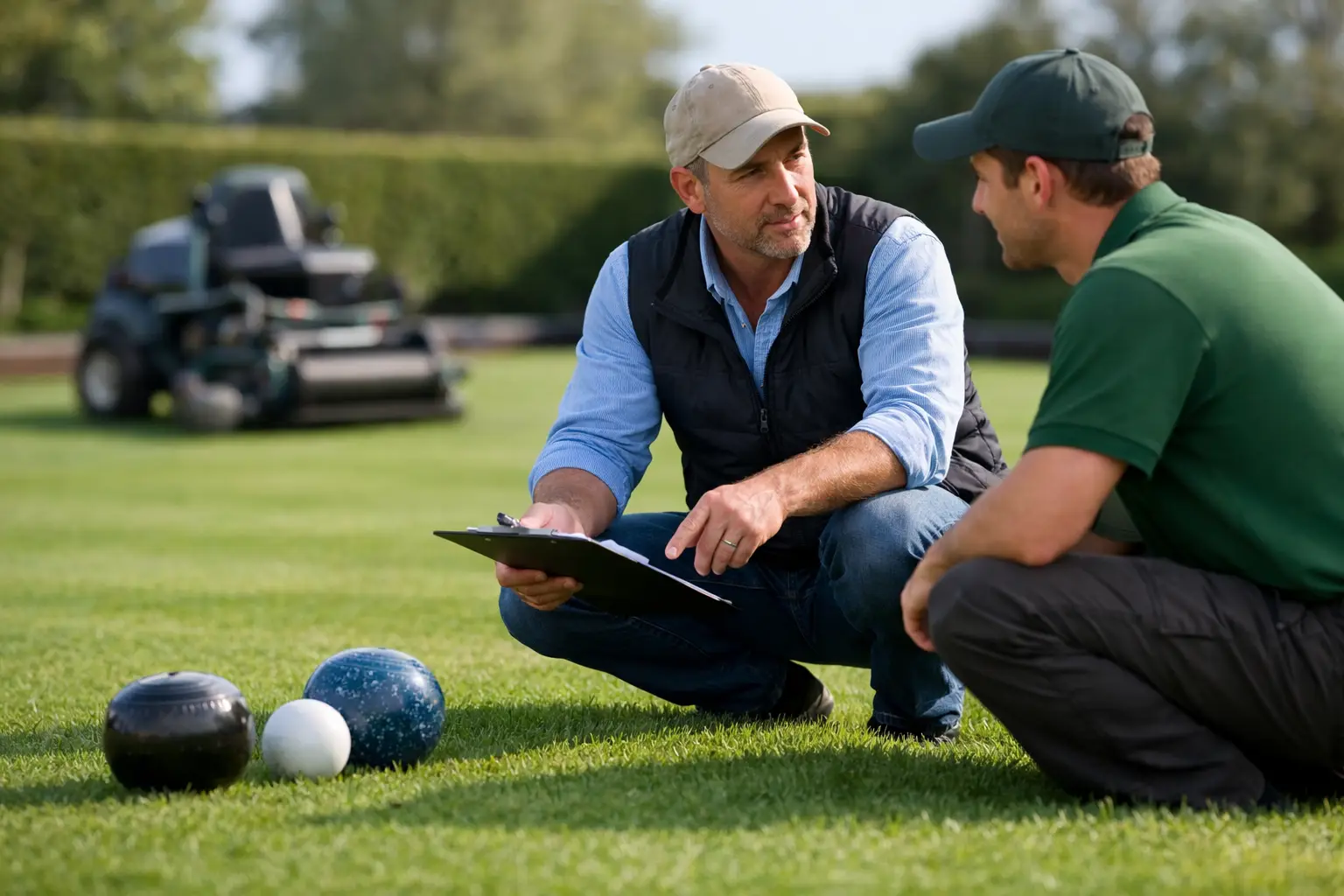
A bowling green does not decline overnight. It loses pace, density and consistency through a series of small decisions: irrigation run times that are not adjusted, fertiliser applied without soil data, disease treated late, or maintenance routines that continue because “that’s how we have always done it”. A bowling green turf consultant provides the senior oversight needed to stop those decisions becoming an expensive playing-surface problem.
For boards, managers and committees, the issue is rarely a lack of effort from greenkeeping staff. It is usually a lack of specialist direction, clear priorities and accountable reporting. Bowling clubs are being asked to deliver better surfaces while controlling water, labour and chemical costs. That requires a plan built around the condition of the green, the club’s resources and the standard members expect.
The real cost of operating without turf leadership
When a qualified superintendent leaves, many clubs try to bridge the gap with a capable groundskeeper, a part-time contractor or advice from product suppliers. Those arrangements can keep the green presentable for a period, but they do not automatically provide a management system.
The result is often reactive turf management. A bare area receives more fertiliser. A disease outbreak receives another chemical application. Slow greens are mown lower. Dry patches receive extra water. Each response may appear reasonable in isolation, but without diagnosis and seasonal planning, it can compound the underlying issue.
That has direct commercial consequences. Excessive water use drives operating costs. Poor chemical records create compliance exposure. Unplanned product purchases consume budget. Most importantly, inconsistent greens affect member satisfaction, visitor play and the club’s reputation in a competitive local market.
A consultant’s role is not to replace the club’s existing staff. It is to give those staff a clear operating framework, technical support and a standard against which work can be measured.
What a bowling green turf consultant actually does
A credible bowling green turf consultant begins with the facts, not a product recommendation. The first step is a diagnostic review of turf health, soil profile, irrigation performance, maintenance practices, staffing capacity, equipment and current expenditure.
This establishes where the club is losing performance or money. For one facility, the central problem may be irrigation uniformity. For another, it may be compaction, organic matter accumulation, shade, poor drainage, nutrient imbalance or a mowing programme that is too aggressive for the grass species and season.
From there, the consultant develops a practical annual maintenance plan. It should set out monthly priorities for nutrition, irrigation, mowing, renovation, pest and disease management, and surface preparation. The plan must be detailed enough for the greenkeeping team to execute, but realistic enough to work within the club’s labour, machinery and budget constraints.
This is where independent advice matters. A consultant who is not tied to selling fertiliser, chemicals or irrigation hardware can assess each option on its technical and financial merit. The recommendation may be to spend more in a targeted area, but it may just as often be to stop spending on products or practices that are not delivering a measurable result.
Strategic direction, not remote commentary
Good consulting is active. It involves regular site inspections, seasonal adjustments, review of weather conditions and support when disease pressure or irrigation failures emerge. It also means translating technical turf information into decisions that a board can understand.
A committee does not need a lengthy agronomy report with no commercial context. It needs to know the current risk, the recommended action, the expected cost, the consequence of doing nothing and how success will be measured. Clear reporting turns turf management from an operational mystery into a governed business function.
Where clubs see the strongest return
The return on specialist oversight is not limited to greener turf. It comes from better decisions made earlier.
Water is a clear example. Overwatering is often used as insurance against dry turf, yet it can encourage shallow roots, disease, soft surfaces and unnecessary utility costs. Underwatering can create hydrophobic soil, plant stress and uneven pace. An irrigation audit identifies whether water is reaching the rootzone evenly, whether schedules match seasonal demand and whether staff are compensating for faults with longer run times.
Chemical use is another area where discipline pays. A seasonal disease strategy, accurate application records and threshold-based decision-making reduce the temptation to spray reactively. This supports compliance, protects staff and helps control costs without compromising playing quality.
Labour is equally important. Greenkeeping teams can lose hours to repeated hand-watering, avoidable repairs and low-value routines. A well-built work programme directs labour towards the jobs that protect surface performance: moisture monitoring, grooming, mowing quality, renovation timing and early intervention.
There is also value in staff development. A senior consultant can mentor existing team members in practical turf assessment, irrigation decisions and application standards. That improves capability without requiring the club to recruit a full-time superintendent in a tight labour market.
When a consultant is the right model
A fractional consultant is not the answer for every club. A large, high-revenue facility with extensive grounds and a significant tournament programme may require a full-time superintendent on site. Conversely, a small club with a stable, experienced greenkeeper and simple infrastructure may only need occasional independent reviews.
The strongest fit is the club that has meaningful turf expectations but cannot justify a six-figure senior appointment. This includes facilities managing a leadership vacancy, dealing with declining green quality, facing escalating water costs or seeking a more disciplined approach to maintenance expenditure.
The model also works well where the operational team is committed but under-supported. The consultant sets the strategy and reviews outcomes; the club’s staff carry out the daily work. Accountability remains clear. The consultant is responsible for the plan and technical direction, while site staff are supported to deliver it consistently.
Questions boards should ask before appointing a consultant
Not all advice is equal. Before appointing a consultant, clubs should test whether the service is designed to improve operations or simply produce reports.
Ask how the consultant assesses irrigation performance, soil condition and turf health. Ask whether recommendations are independent of product sales. Ask how often the site will be inspected, what reporting the board will receive and how urgent issues are handled between visits.
It is also reasonable to ask about relevant experience. Bowling greens have different performance demands from golf fairways, sports fields or residential turf. The consultant should understand fine-turf presentation, consistency of pace, seasonal disease pressure and the practical limitations of club budgets and volunteer-led governance.
Finally, ask how outcomes will be tracked. Useful measures may include water consumption, disease incidence, chemical expenditure, surface firmness, turf density, member feedback and the completion of planned maintenance works. Not every outcome can be reduced to one number, but a service without measurable checkpoints is difficult to govern.
Turning an audit into an operating plan
The initial audit should not sit in a folder after the presentation. Its value comes from converting findings into a sequence of decisions.
The first 90 days should focus on urgent risks and quick operational wins: correcting obvious irrigation issues, establishing chemical records, adjusting mowing or nutrition where needed, and setting a consistent inspection routine. The next phase should address medium-term work such as soil conditioning, drainage improvements, irrigation upgrades or renovation planning.
Board reporting should remain concise and regular. A monthly update can record surface condition, completed work, current risks, expenditure against budget and the next priorities. This gives committees confidence that funding decisions are connected to a defined turf strategy, rather than responding to the latest complaint or visible patch of stressed grass.
Gen1 Sportsturf applies this model through independent diagnostic audits and ongoing fractional leadership, giving clubs access to senior turf direction without carrying the cost of a full-time executive role.
Better greens start with better decisions
A bowling green is one of the club’s most visible assets. Members judge it with every bowl, visitors remember it after every match, and staff carry the pressure of keeping it consistent through heat, rain, disease and budget limits.
The right consultant does not promise perfect turf every day of the year. They create the systems, priorities and accountability that make strong playing conditions more repeatable. For a club that needs to protect quality while making every maintenance dollar work harder, that is a practical investment in the surface and the future of the facility.